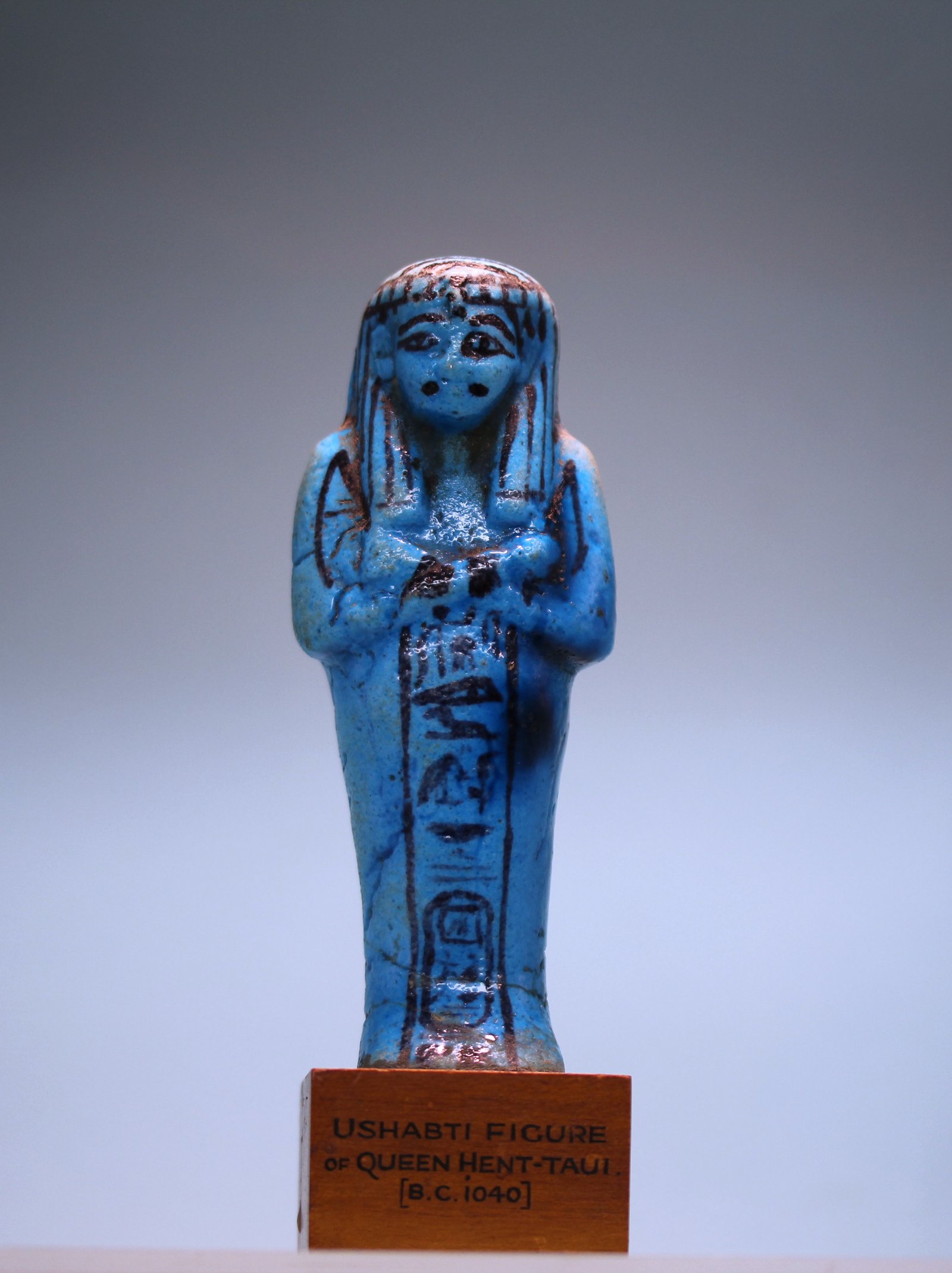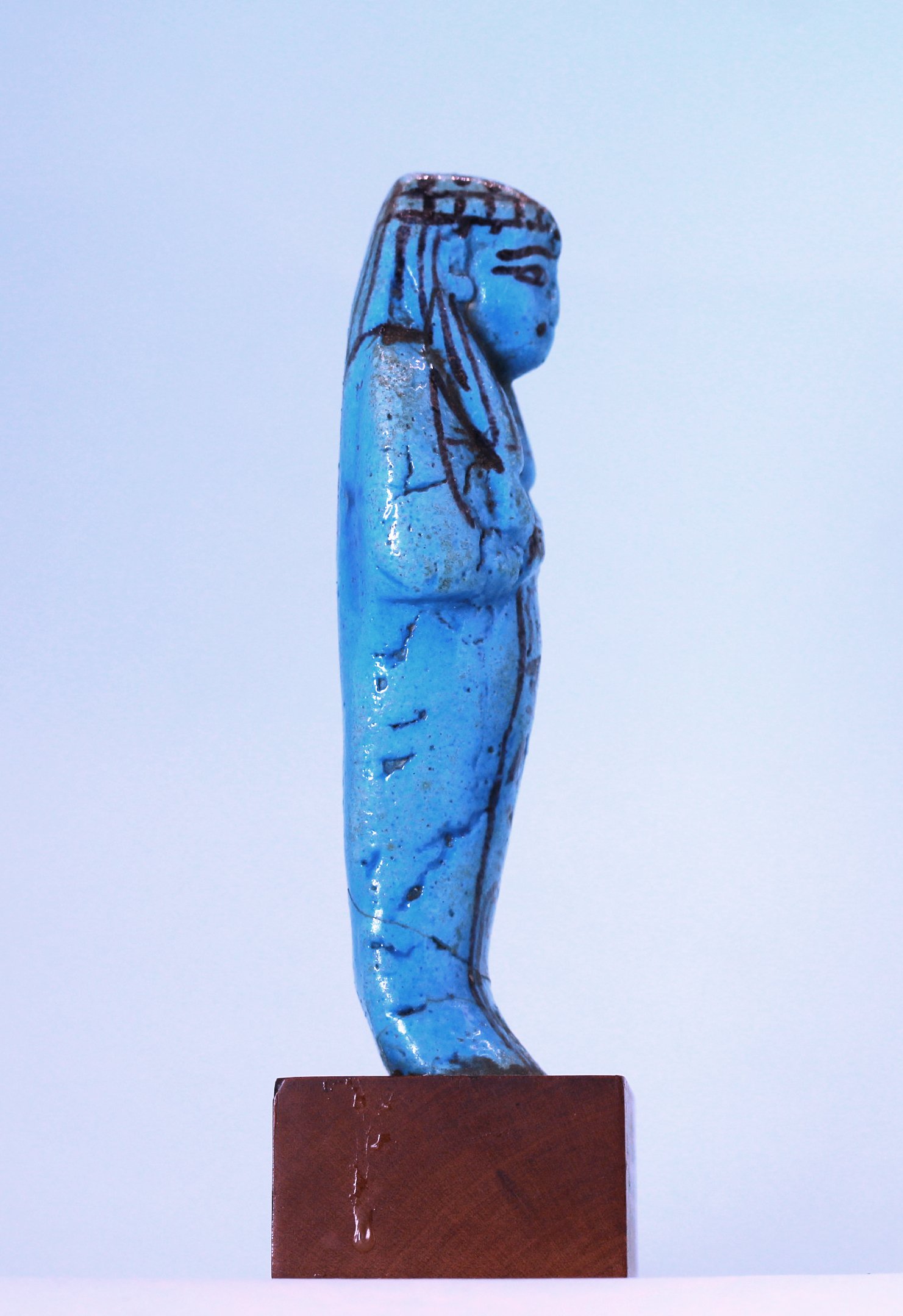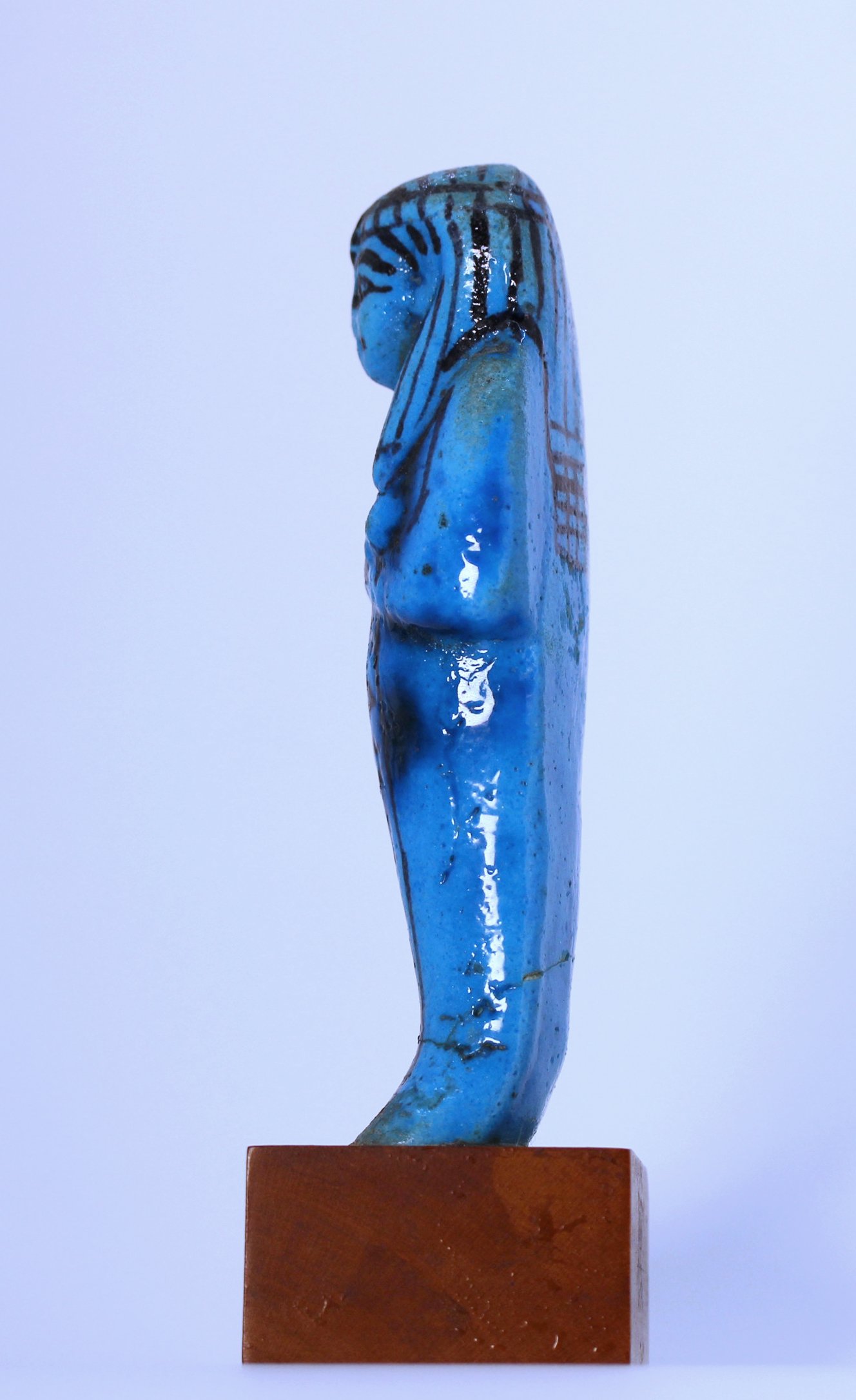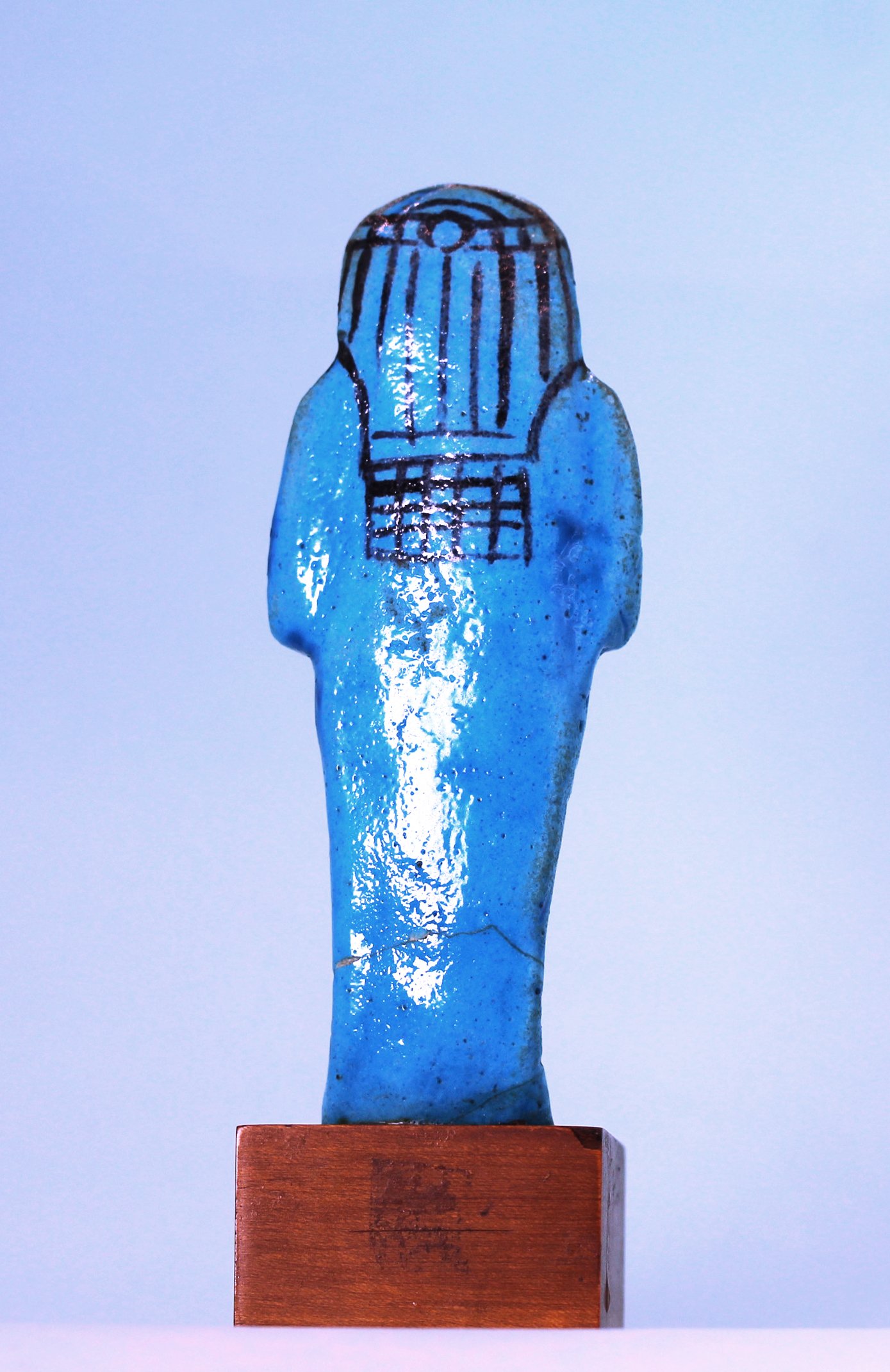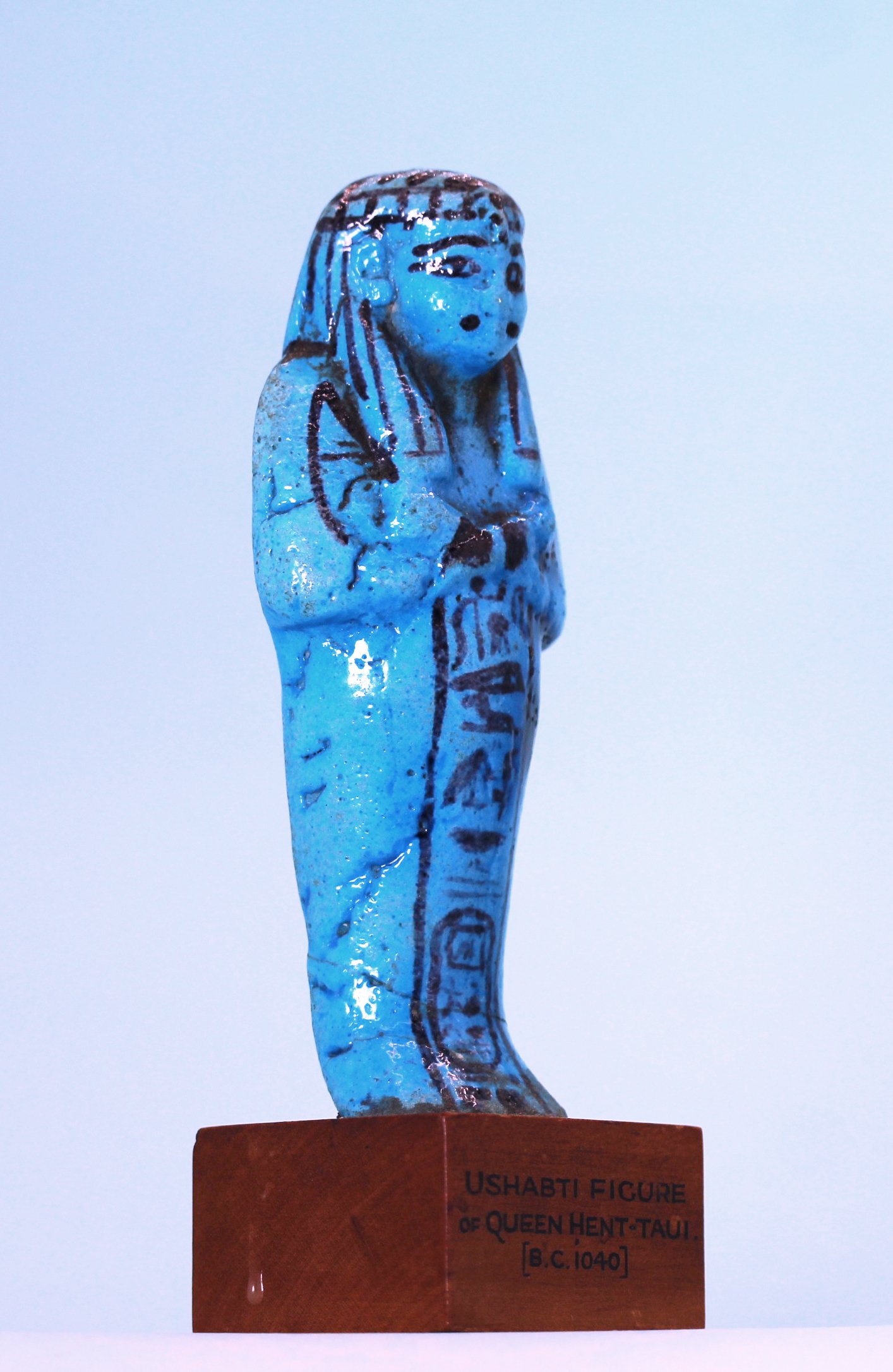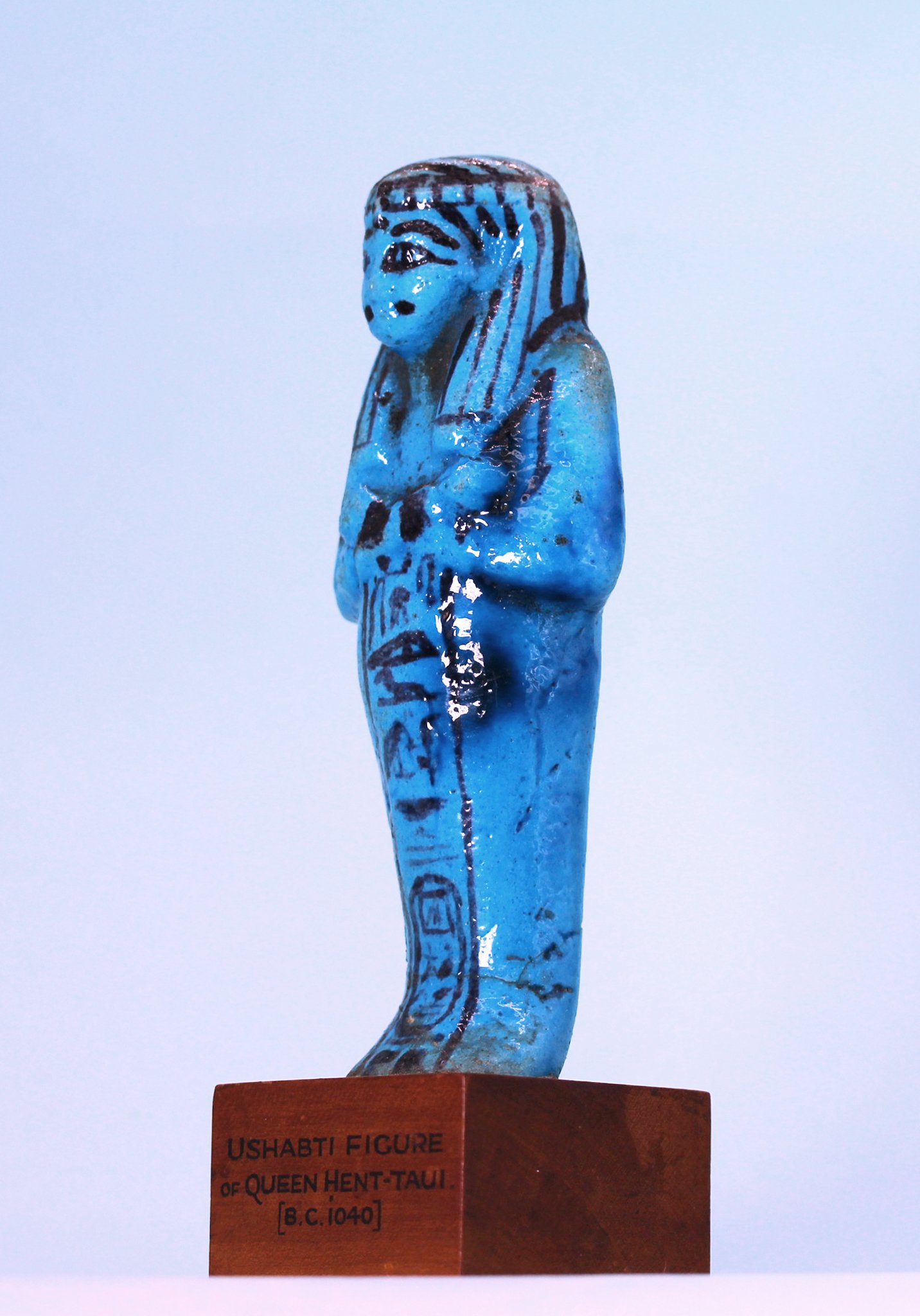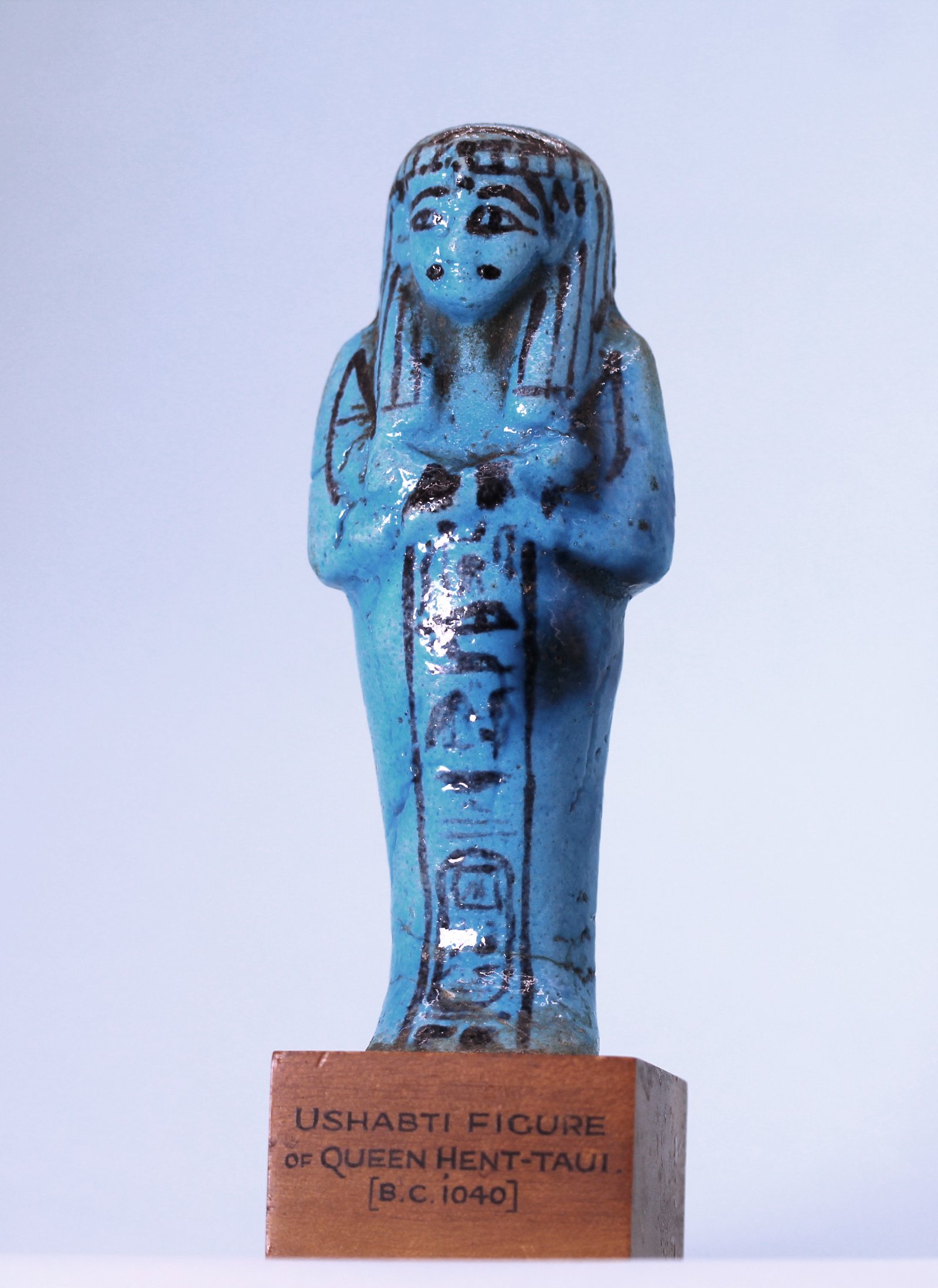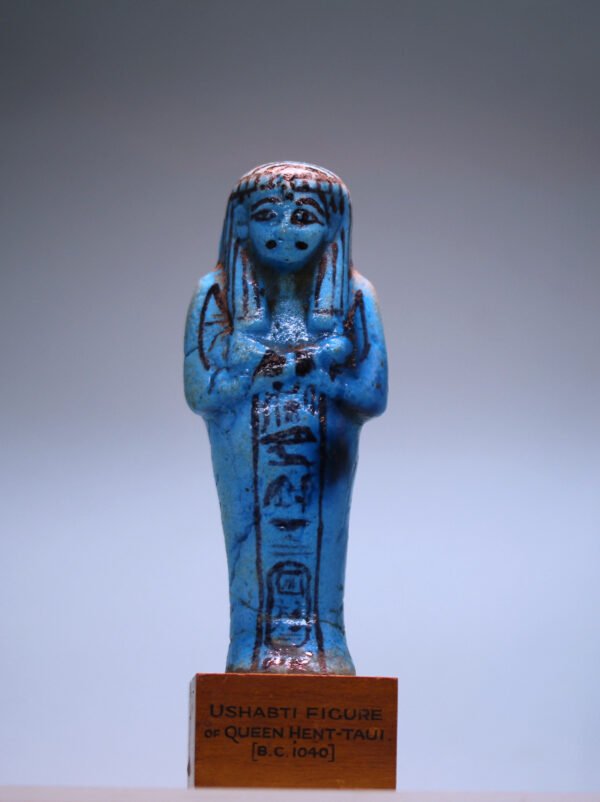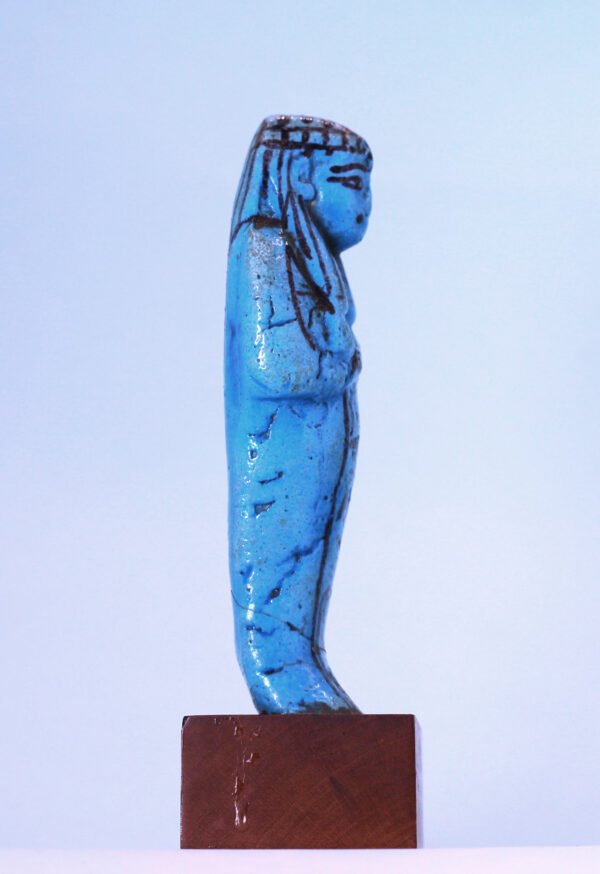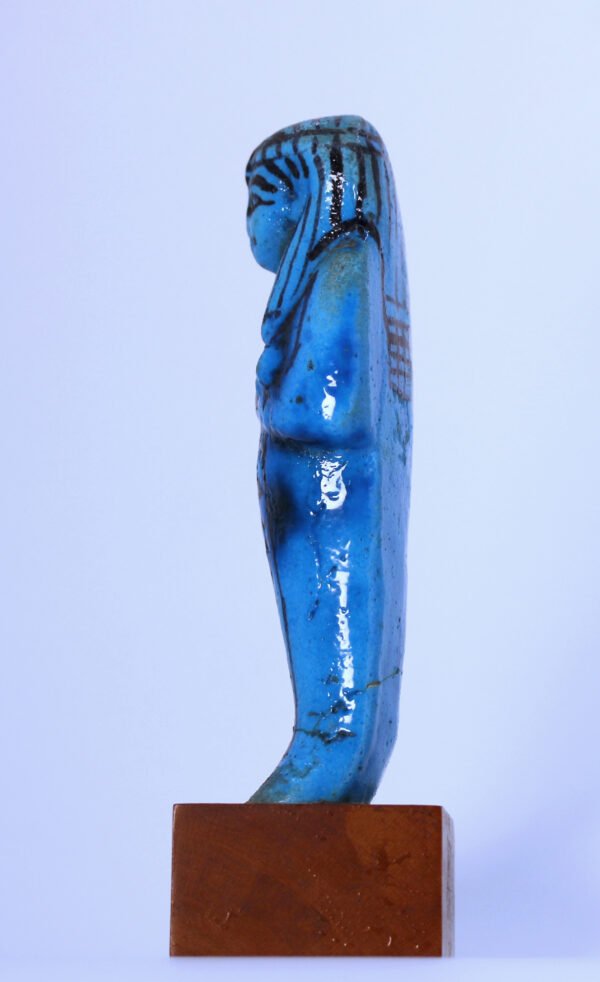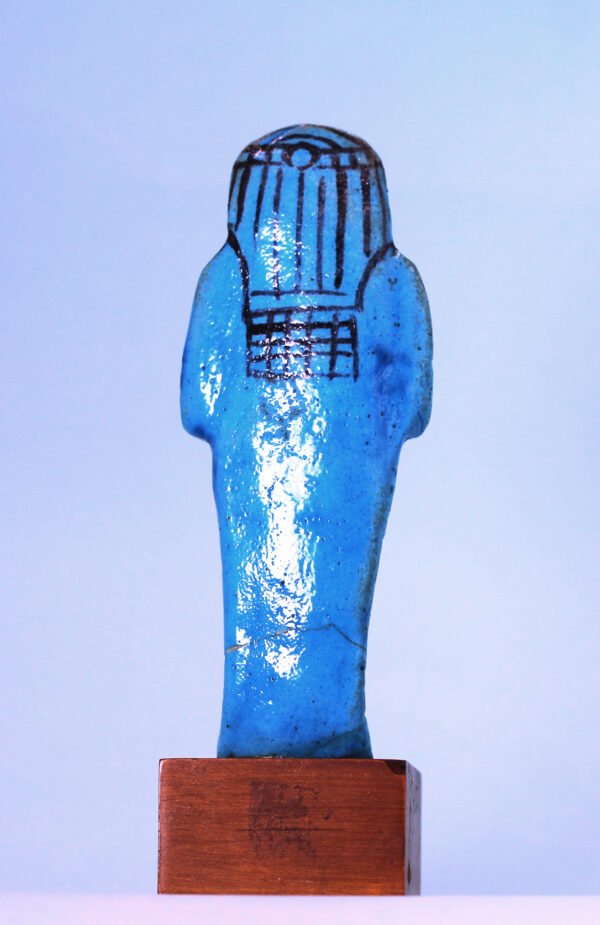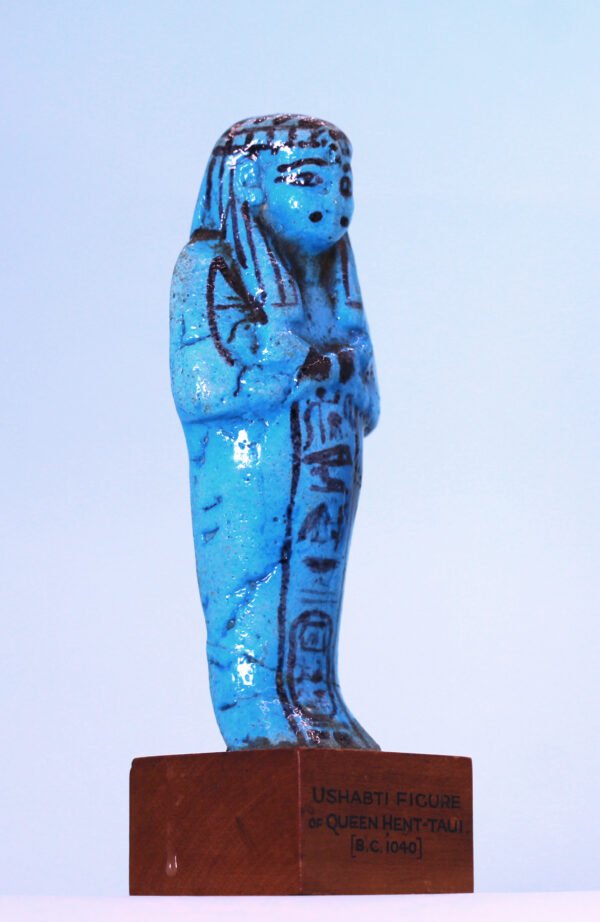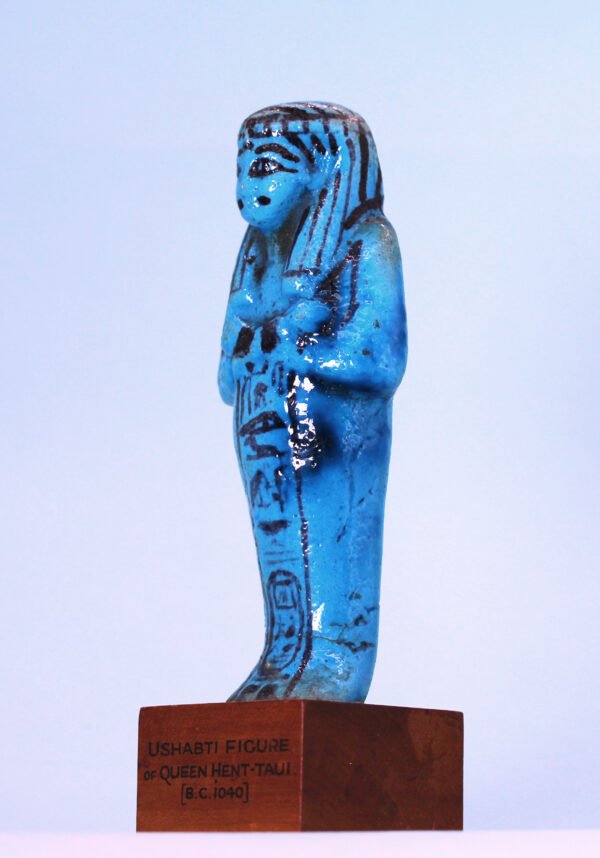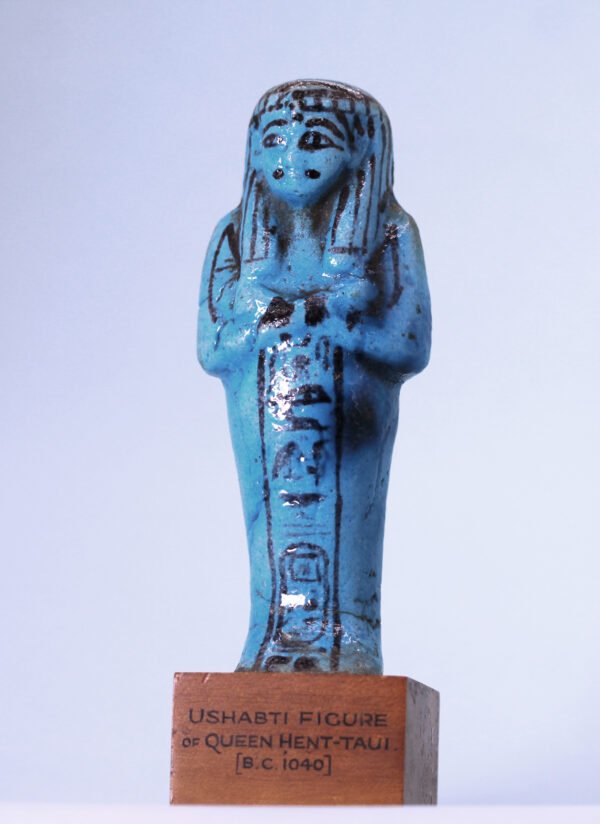
An ancient Egyptian blue faience ushabti of Henuttawy. The mummiform figure wears a striated tripartite wig with a seshed head band, her crossed hands holding hoes, a seed bag over her shoulder. The vertcial Hieroglyphic inscription in six lines reads, “the illuminated one, the Osiris, the King’s mother, the lord of the two lands, Henuttawy.”
Henuttawy was perhaps the daughter of Pharaoh Pinudjem II and Queen Iset-em-Khebit. The tomb of Henuttawy has never been located, but her ushabtis have been dispersed since the early 20th century. Examples are known from museums in Berlin (8530, 9545, 9546), Cairo (CG48459, 48460), Florence (6548), Leiden (F 1964/12.4), London (BM 15763, 65803), and Vienna (AS 5968).Shabtis were first introduced in the Middle Kingdom as substitutes for the the mummy in case it was destroyed. During the Second Intermediate Period inscribed wooden figures called shawabtis (after the Egyptian word for wood, shawab) began to be placed in tombs. During the New Kingdom, shabtis assumed a new role as servant figures for the deceased. They were now depicted with agricultural equipment. By the Third Intermediate Period, the number of shabtis placed in the tomb was set at 401 (365 workers and 36 overseers). During the Late Period the tomb figures became known as ushabtis (‘answerers’), these figures represented servants who would magically answer when called upon to perform agricultural duties for the Pharaoh (in the form of Osiris) in the afterlife. Their main function was to ensure the individual’s comfort and freedom from daily labor in the next life.
$9,500