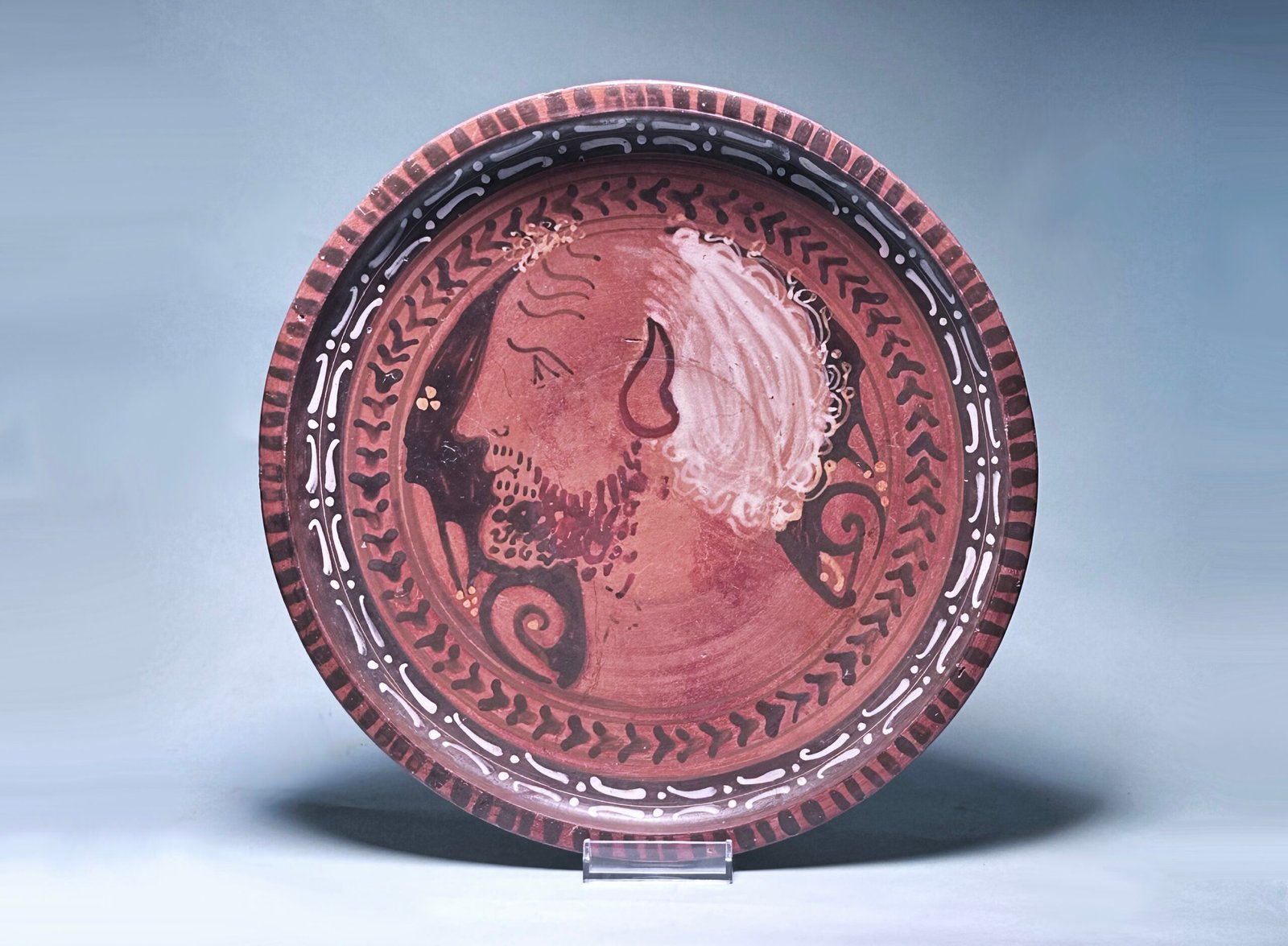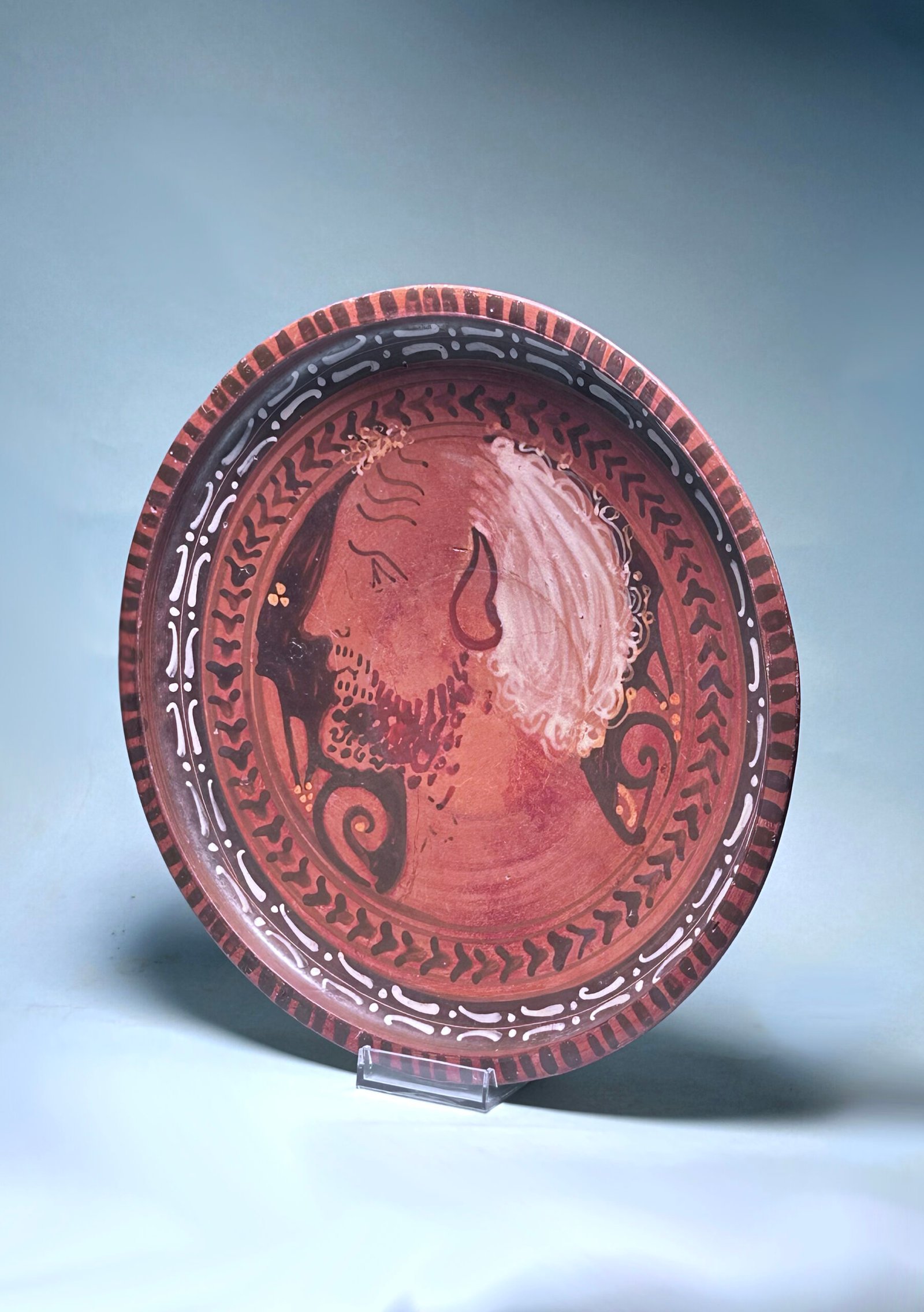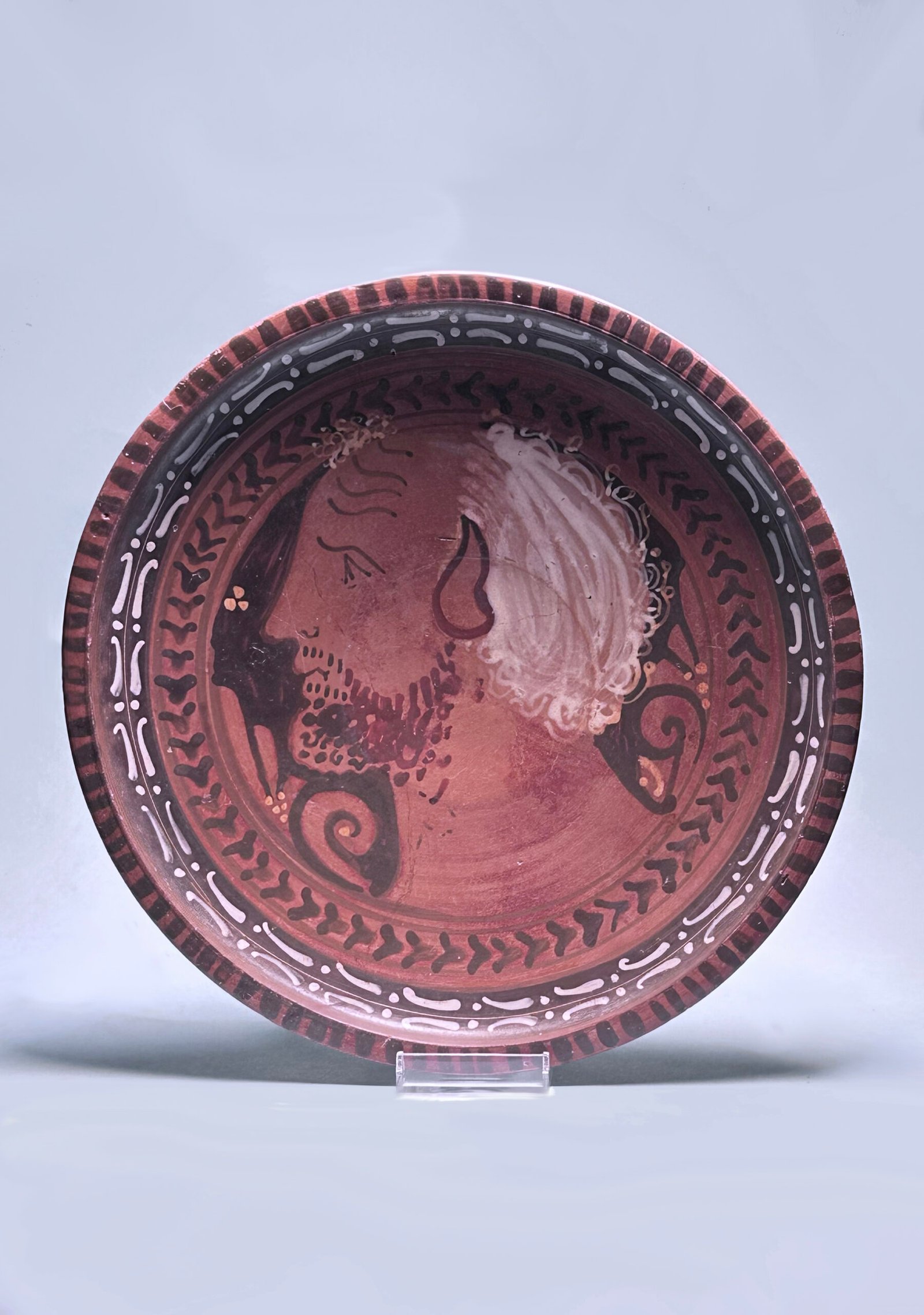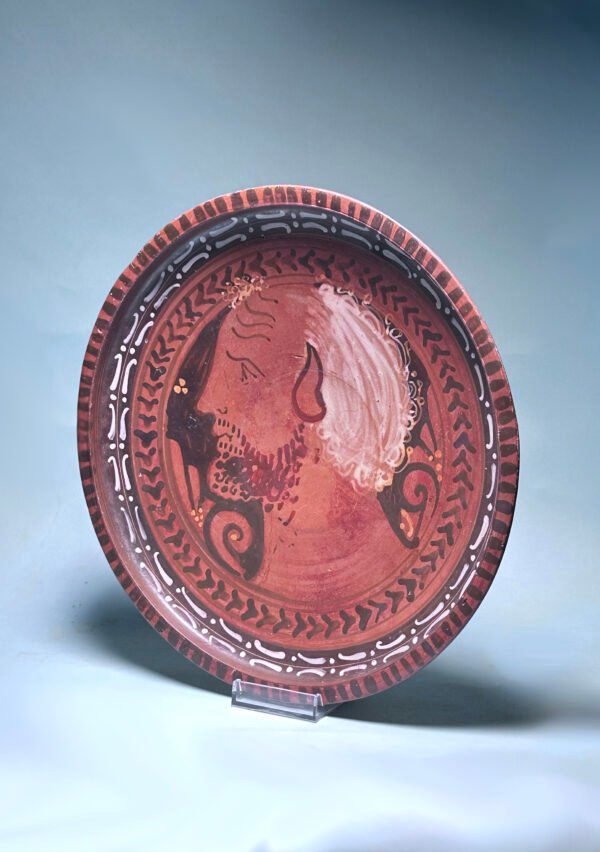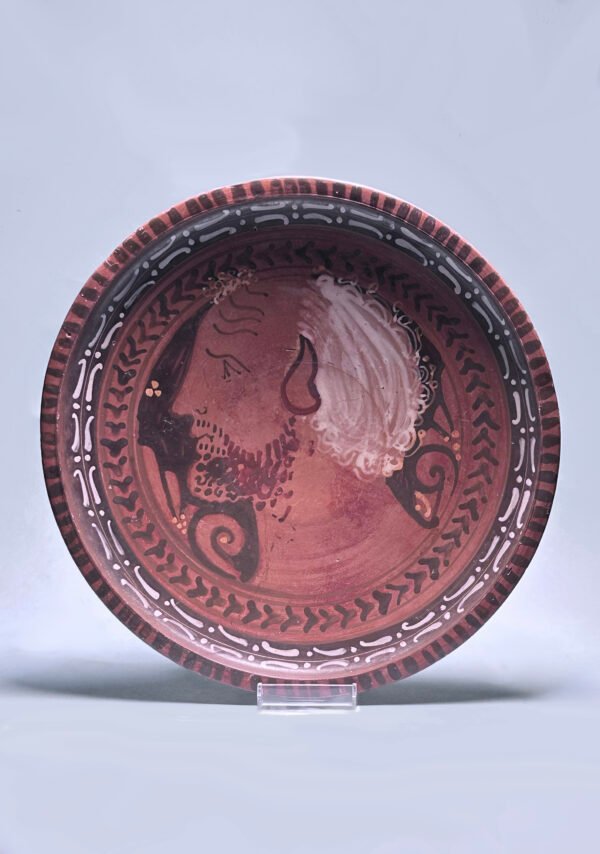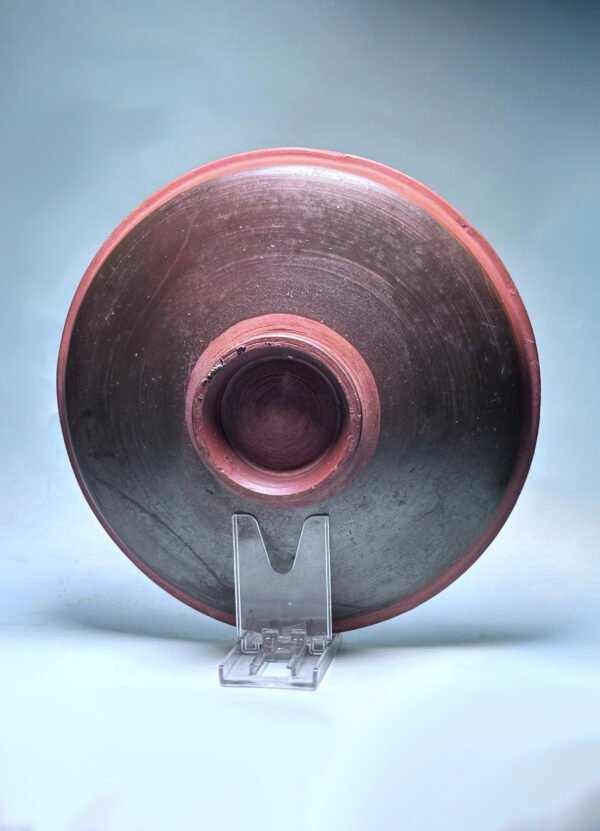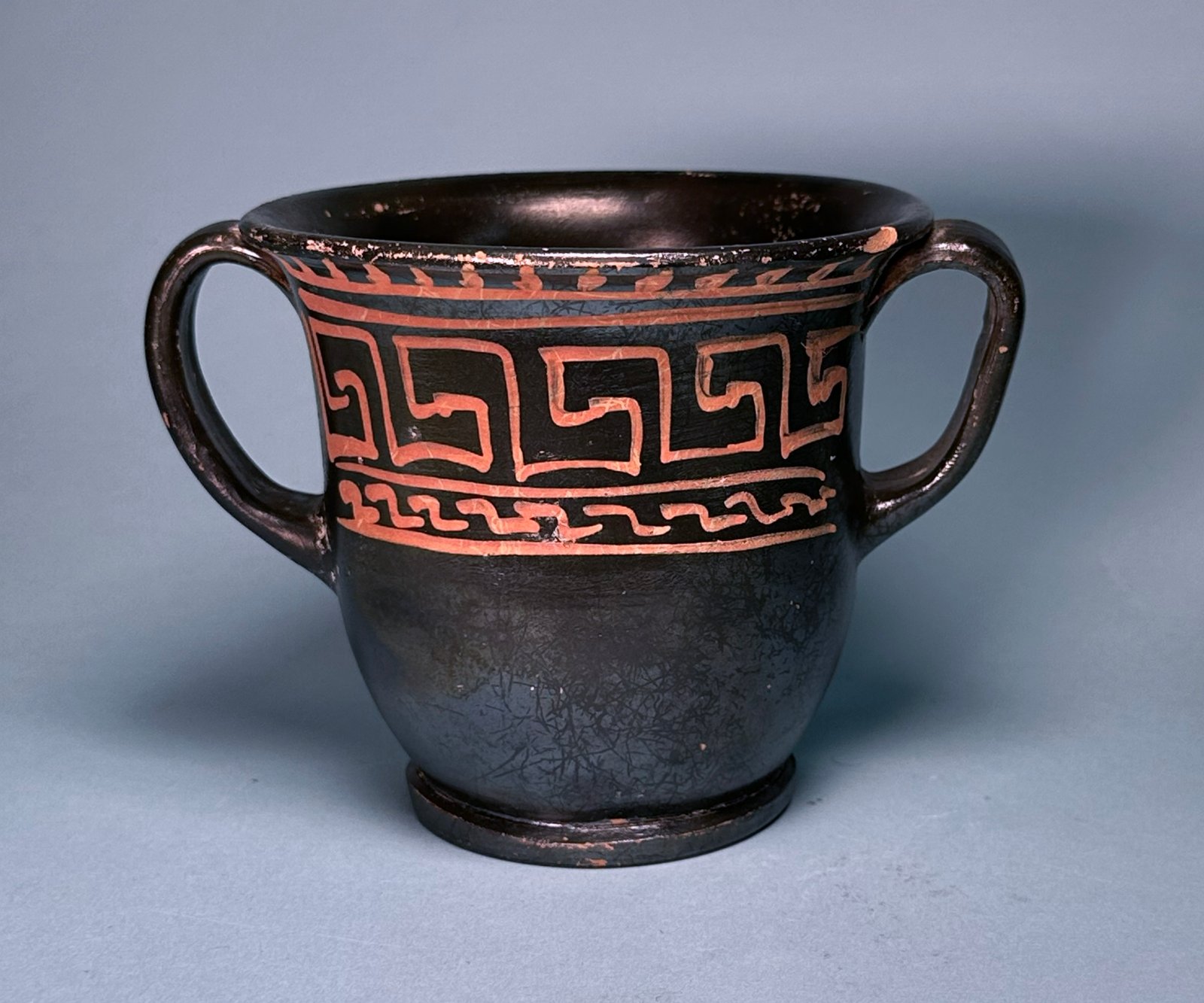
An ancient Apulian Greek red-figure large footed plate painted with an image of an old balding bearded white haired satyr facing left in profile surrounded by a band of chevrons and foliate pattern in added white.
The output and quality of the Greek colonial potters working in Southern Italy increased greatly following the Peloponnesian War when Attic exports fell off sharply. South Italian Colonial Greek craftsmanship of the 4th century BC was an amalgamation of the Ionian (Athenian, Attic) conventions, and Doric (western colonial Greek) styles, with a noticeable native Italian aesthetic. The five predominant regional schools of South Italian pottery were: Apulian, Sicilian, Lucanian, Paestan, and Campanian.
$5,000