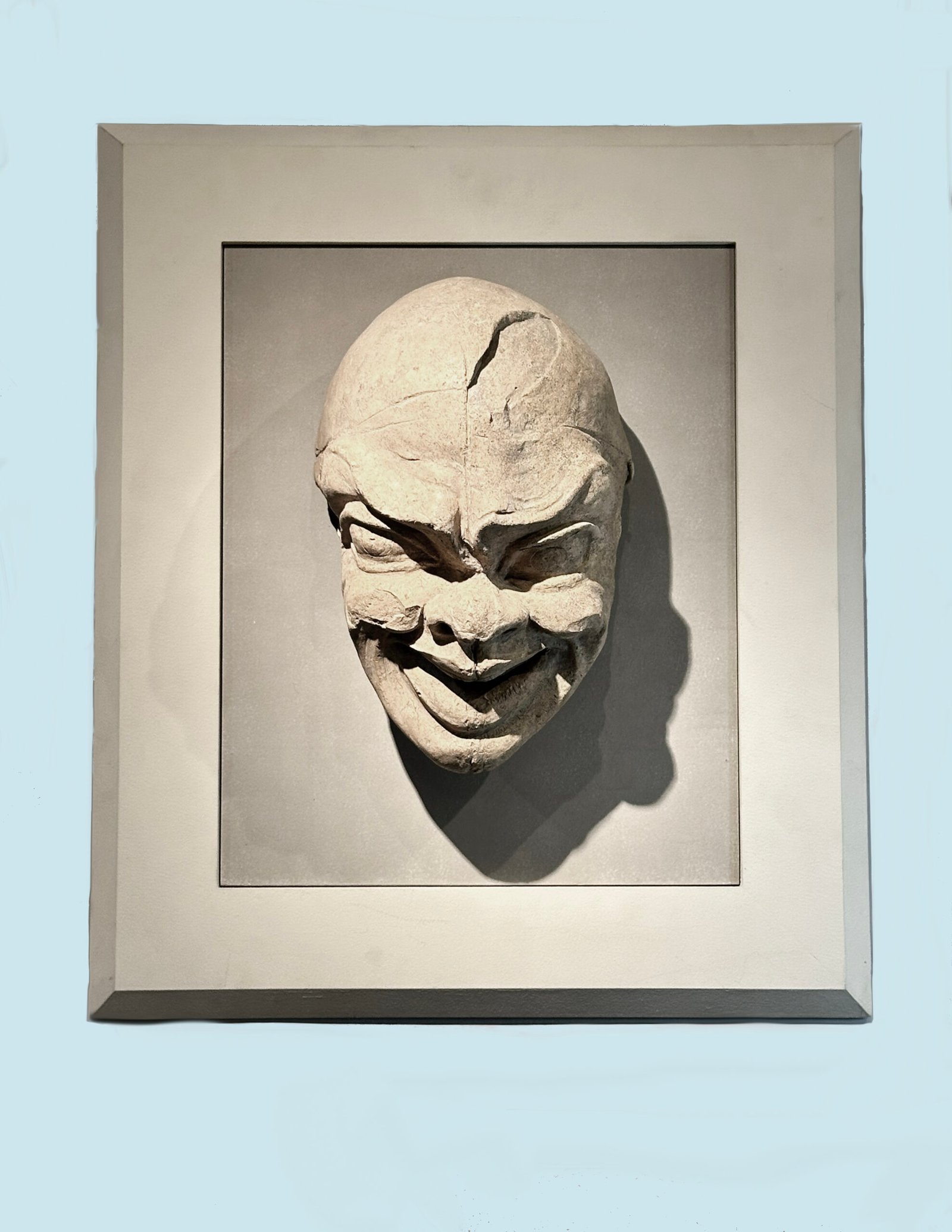
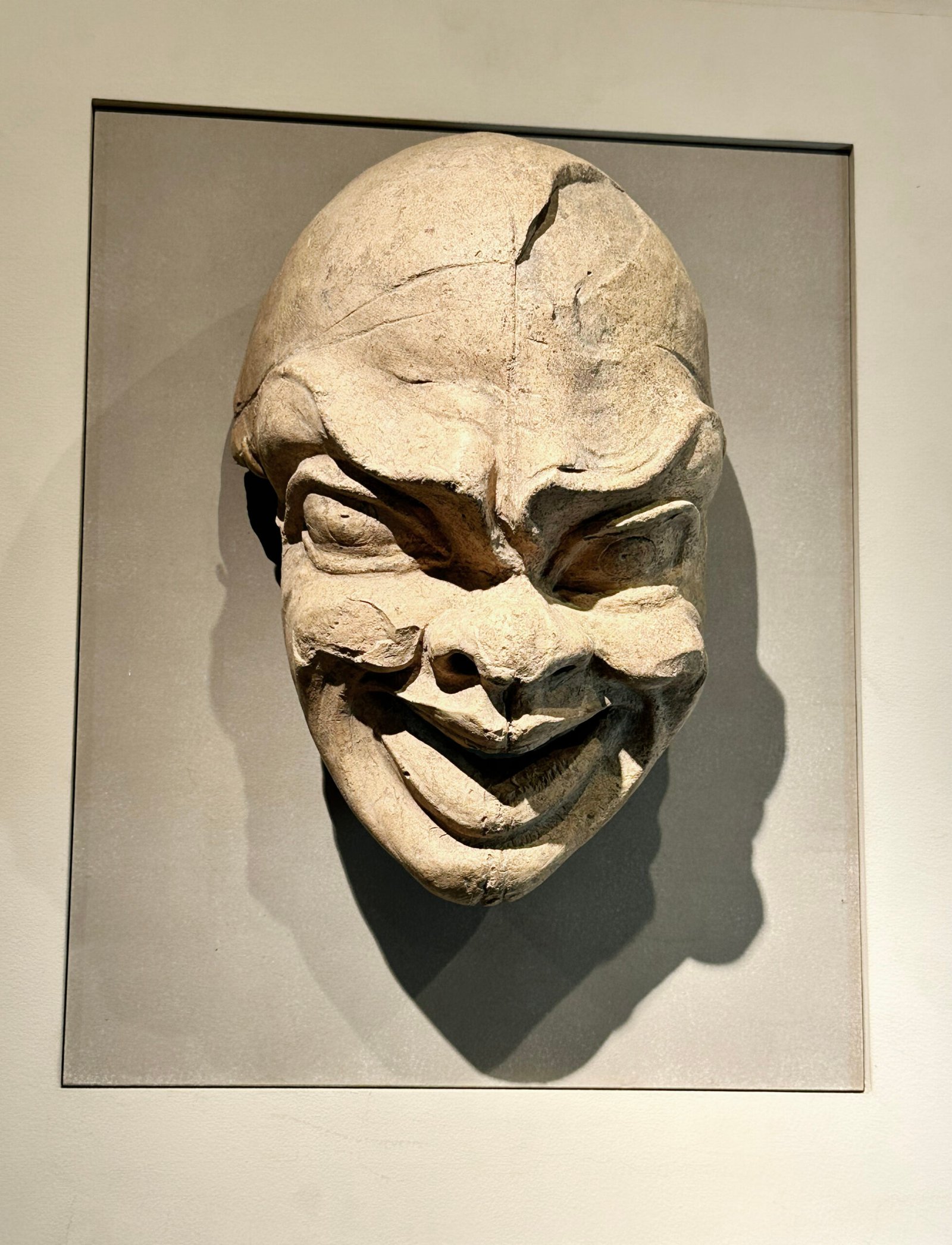
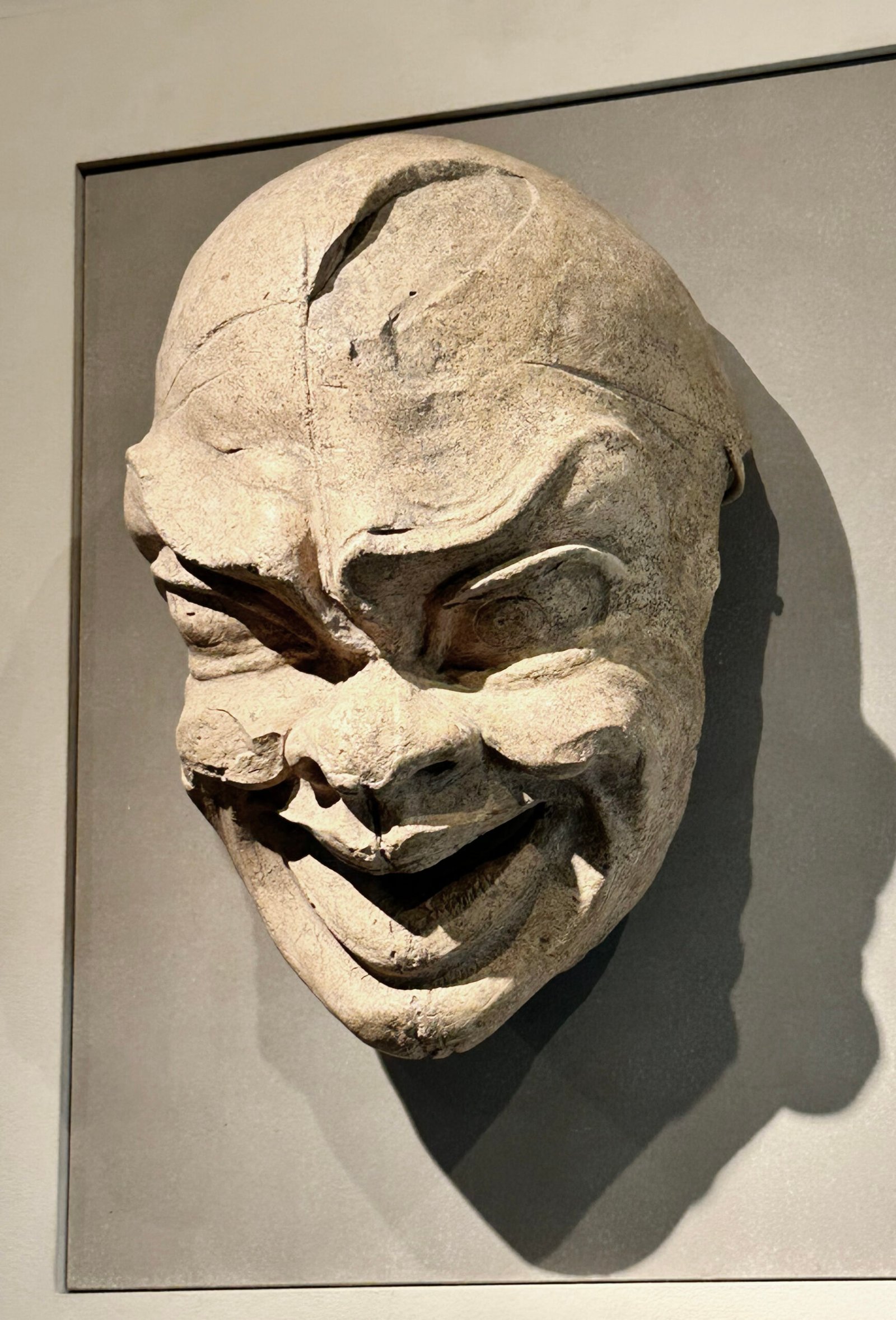
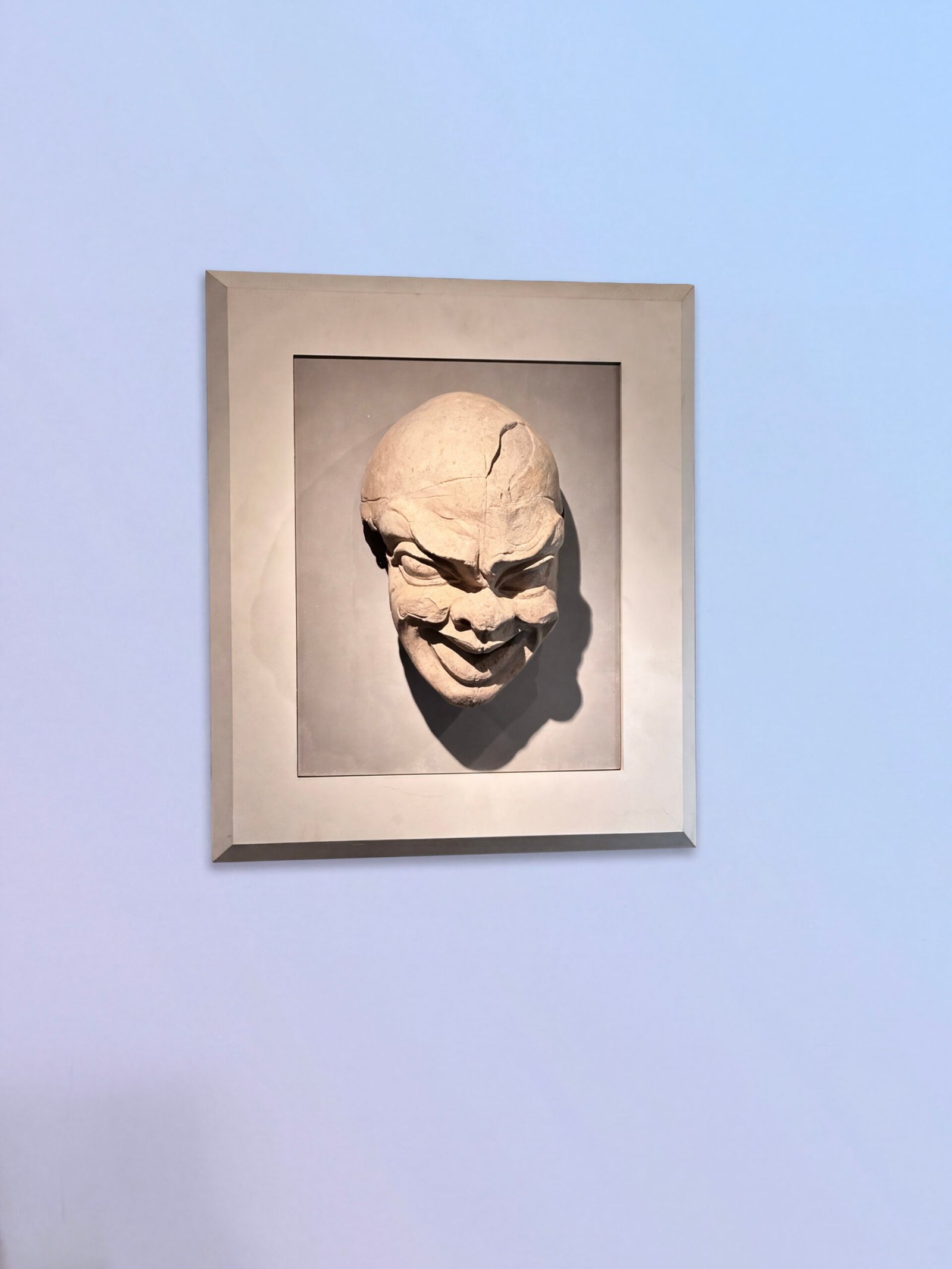
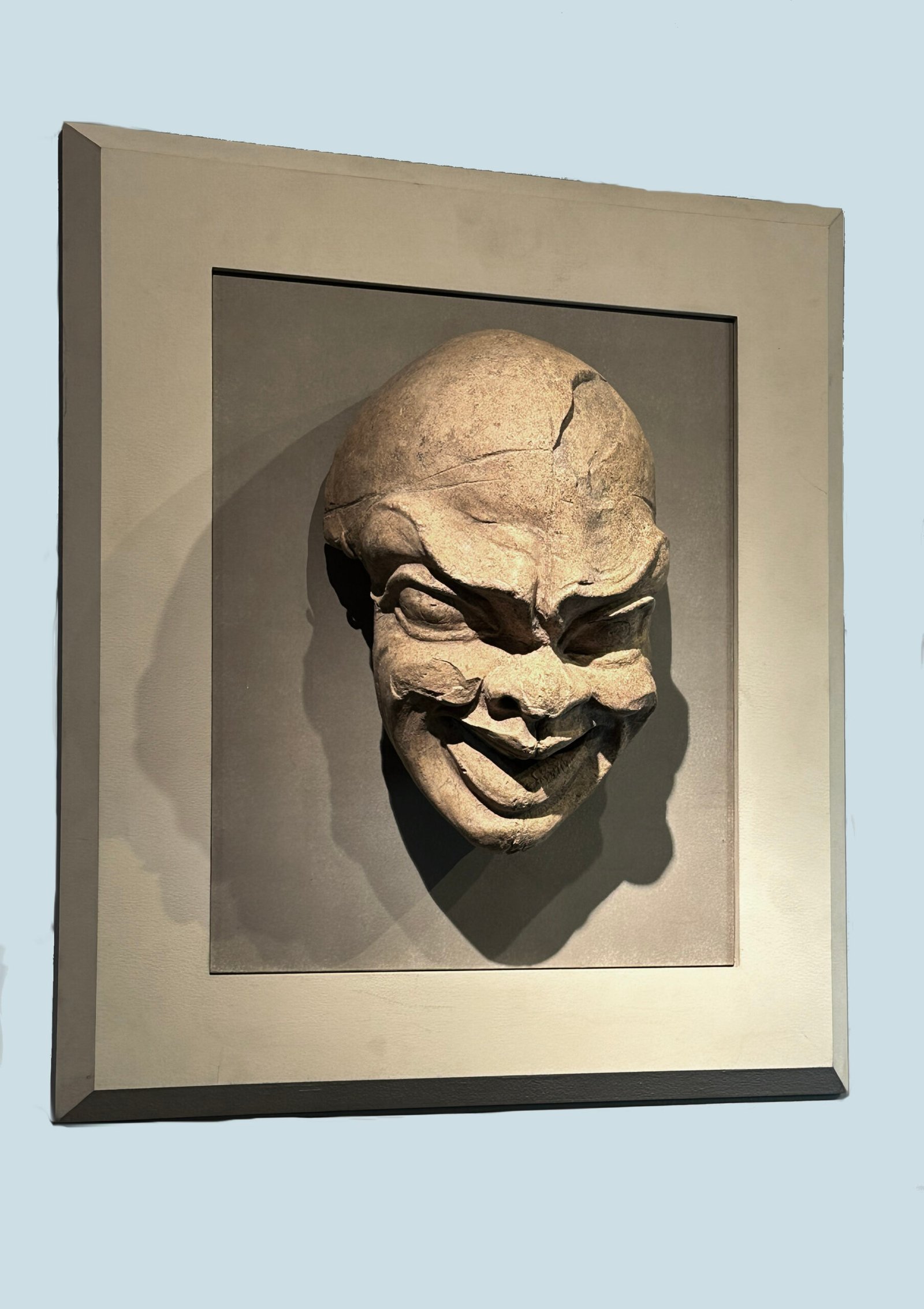
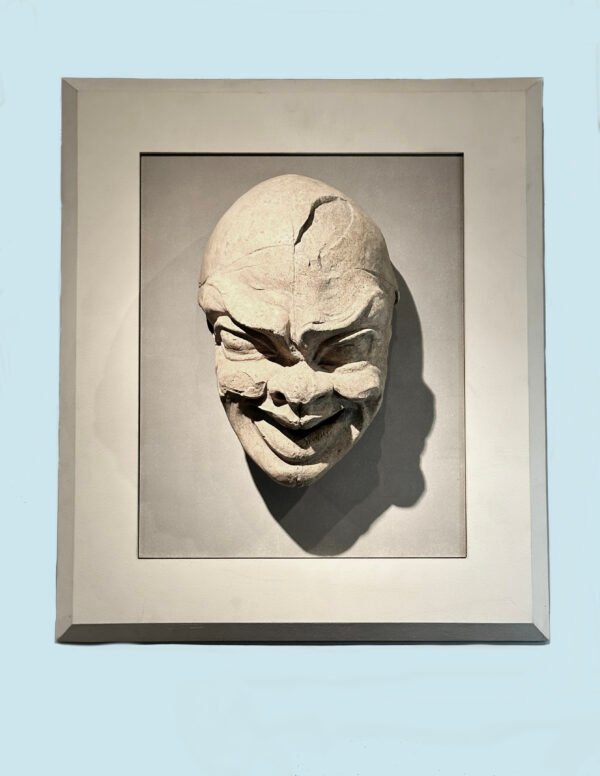
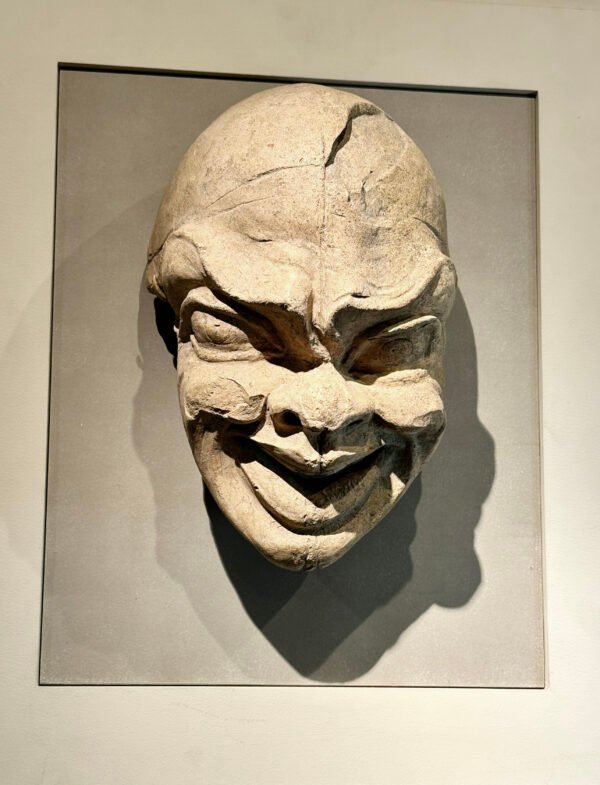
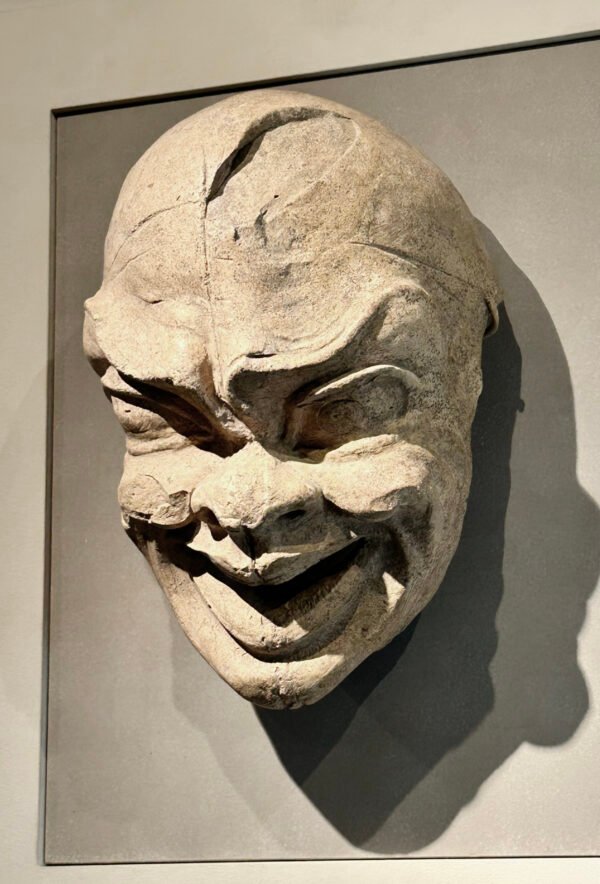
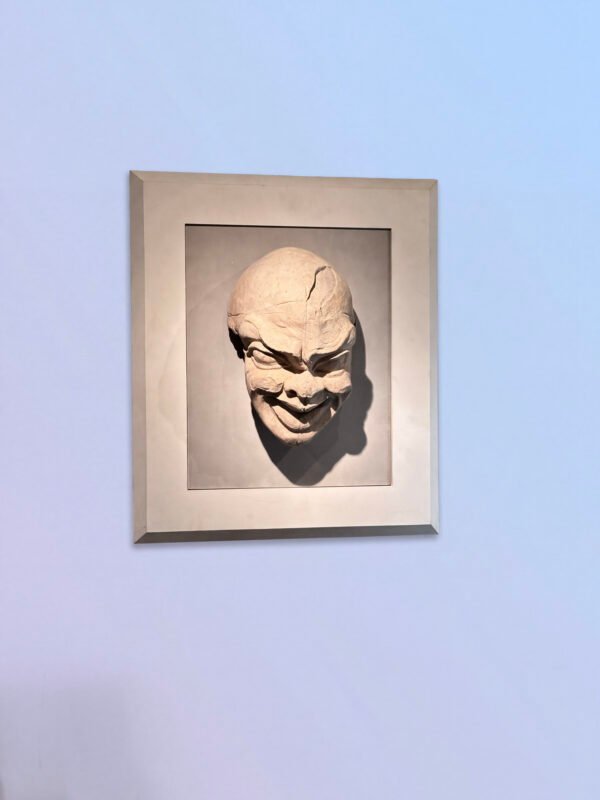
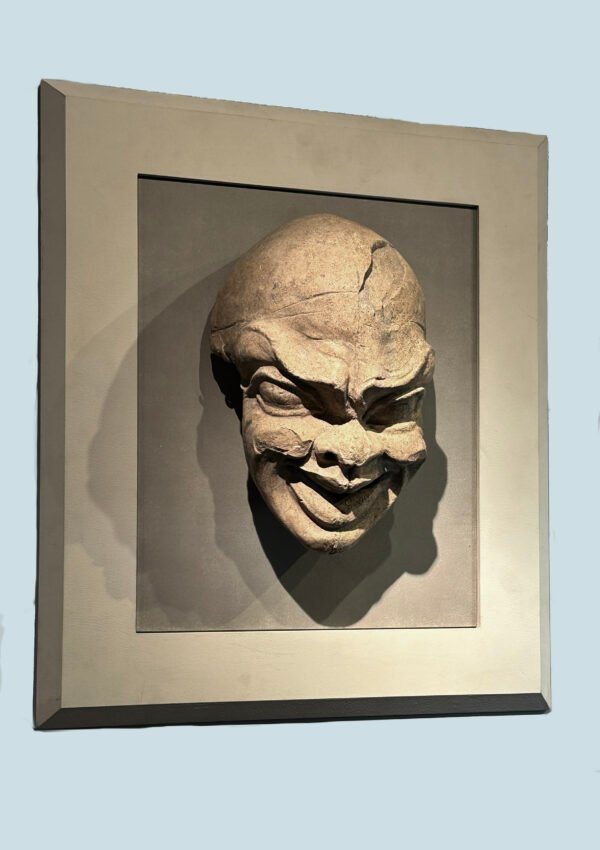
The Athenian playwrights Menader and Philemon started a movement known as New Comedy in the 4th century BC. The popular new comedies reflected a more worldly Hellenistic view with diverse characters and new settings. The theaters of the Greek colonies of Southern Italy were evidently adorned with masks of favored characters from these works. In the 2nd century AD, the scholar Julius Pollux of Naucratis, recorded in his Onomasticon forty-four different types of New Comedy characters and there specific theatrical masks. Pollux’s mask 25, representing a cook as a bald man identifies this piece.