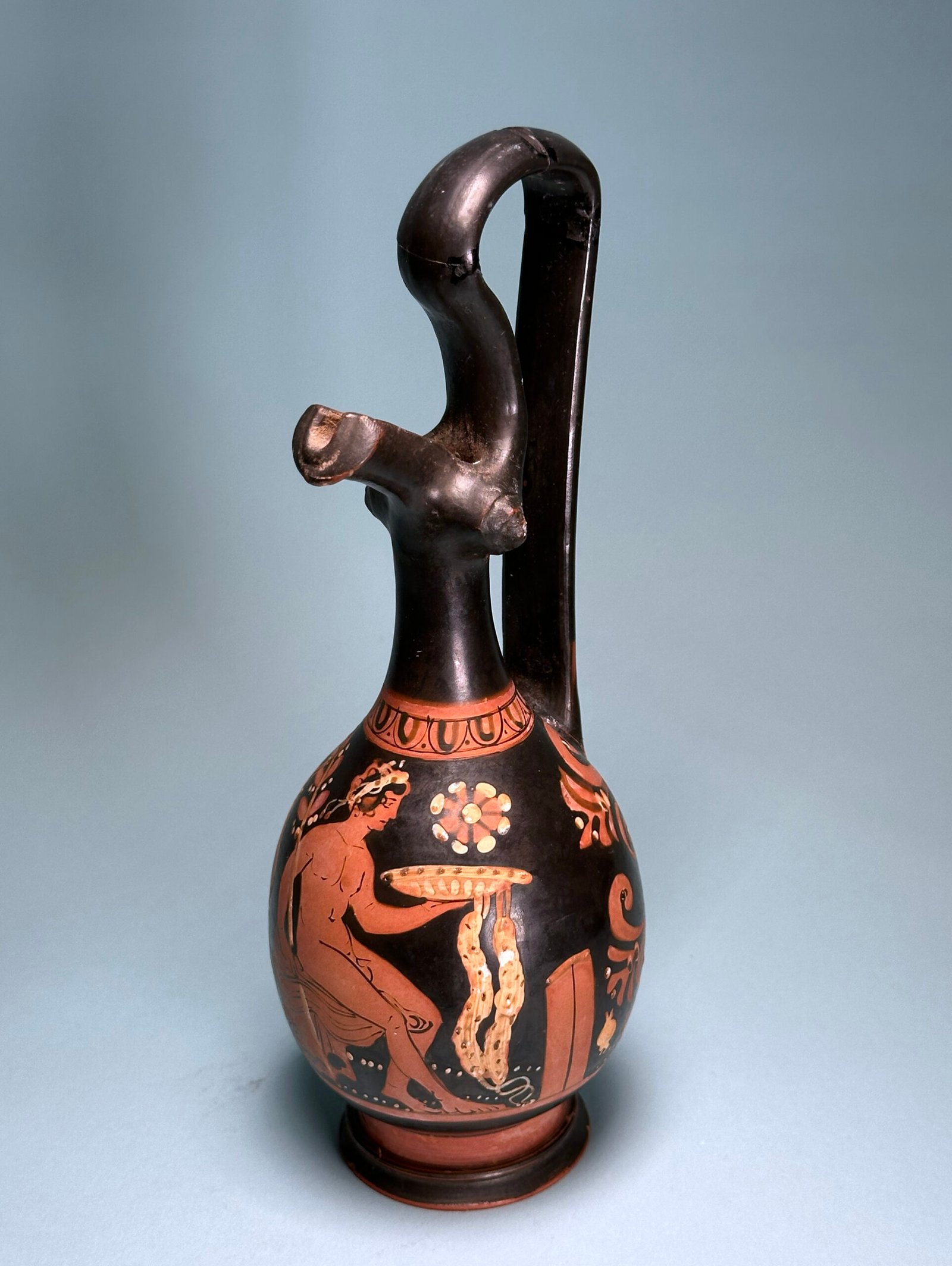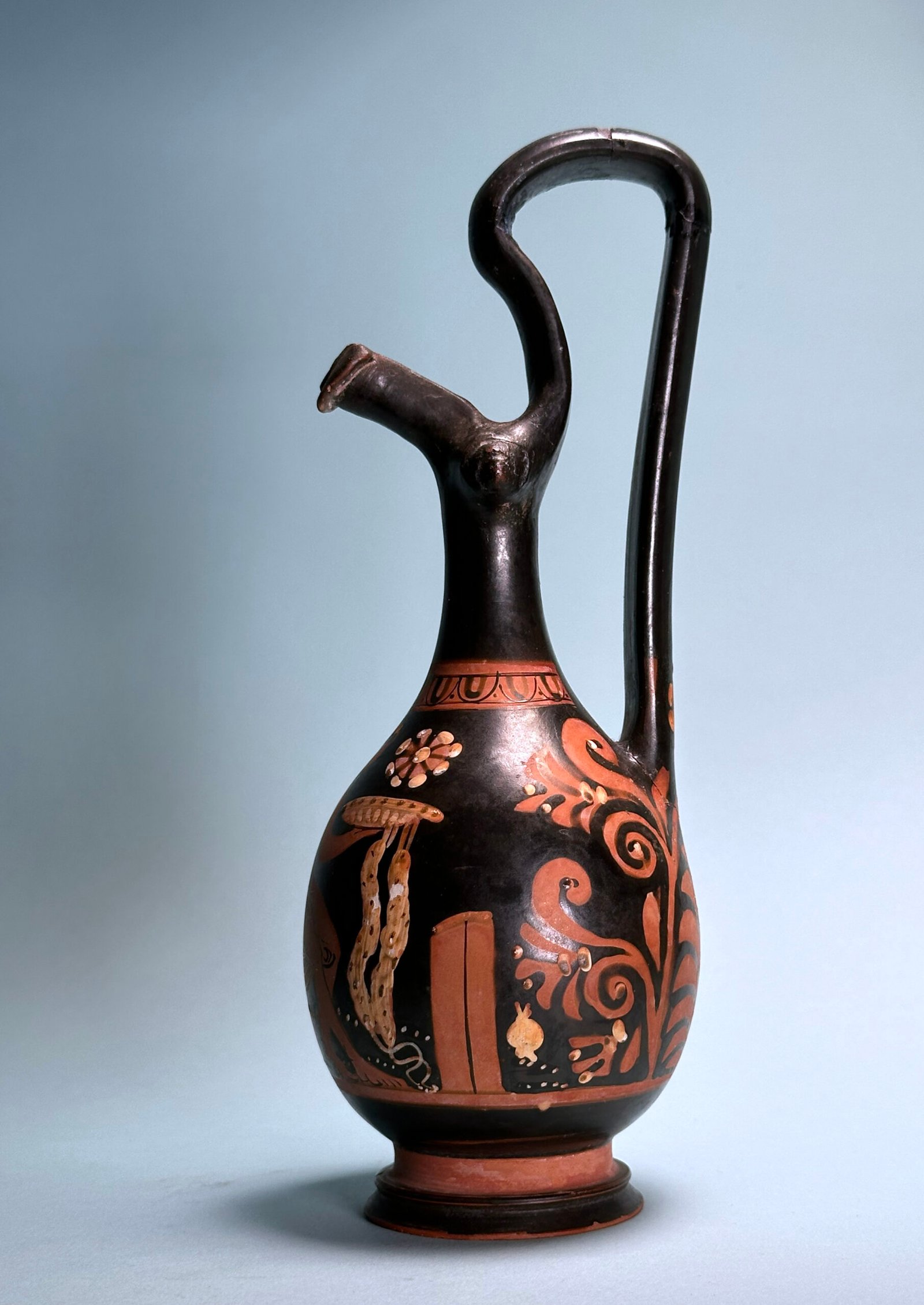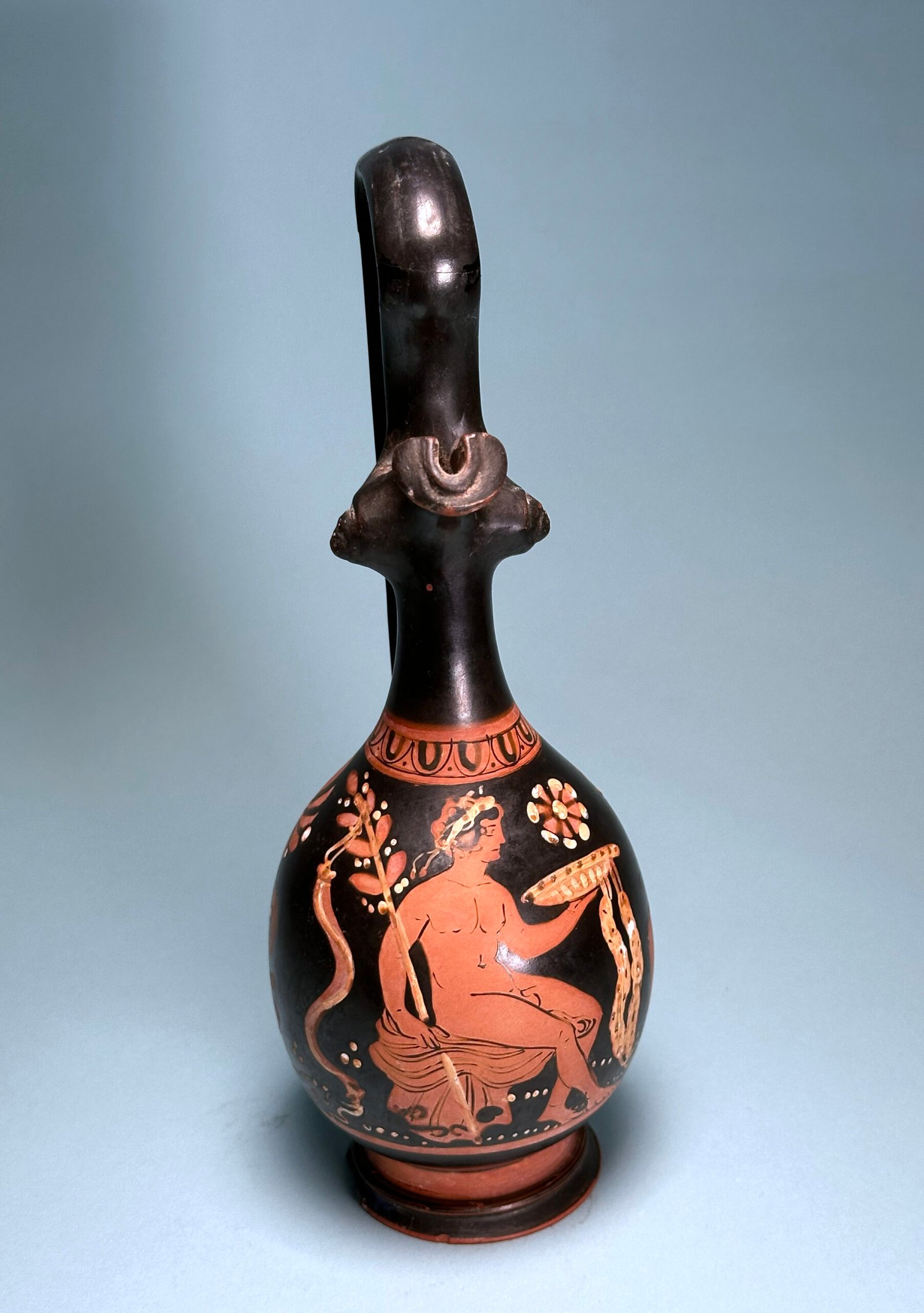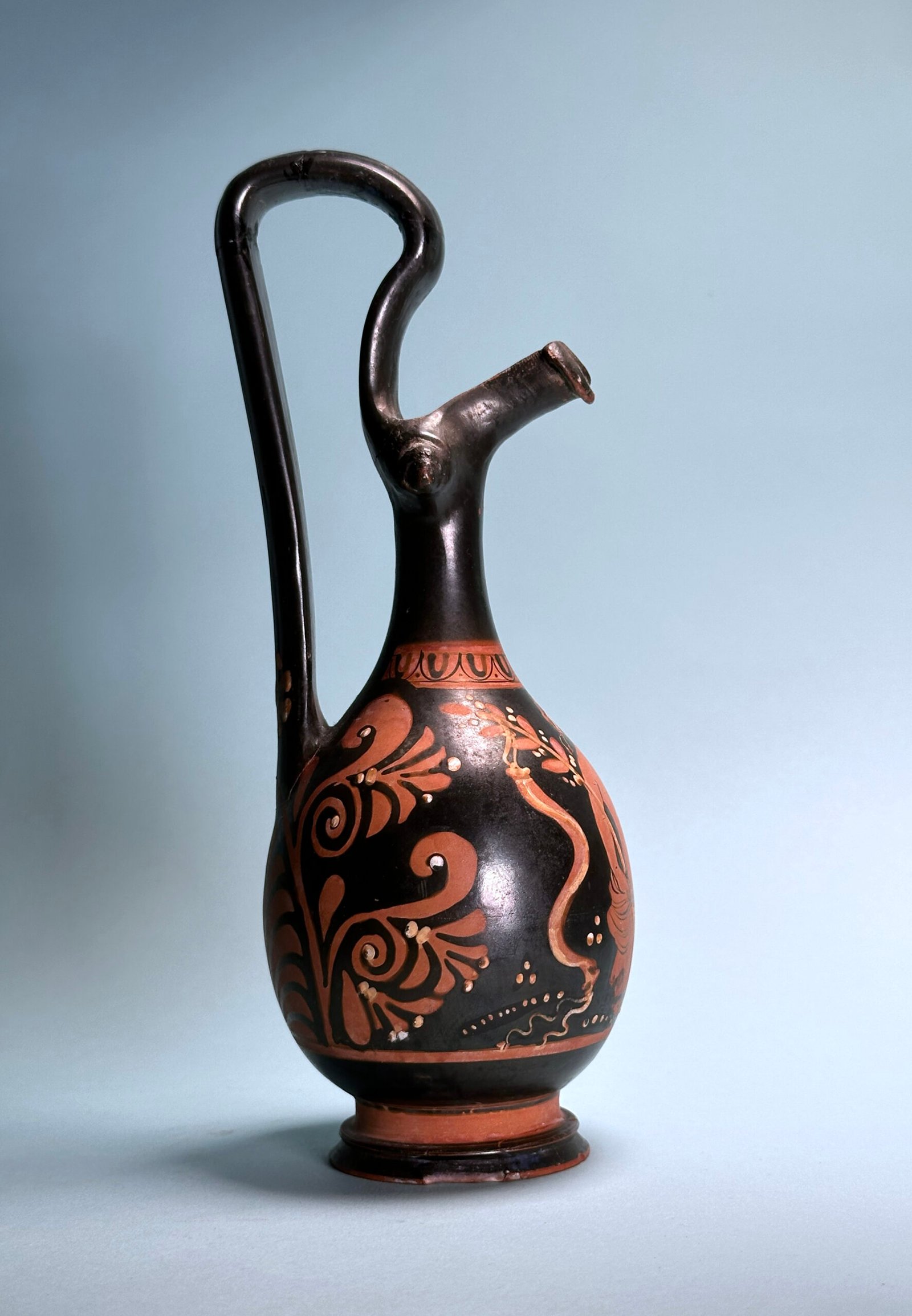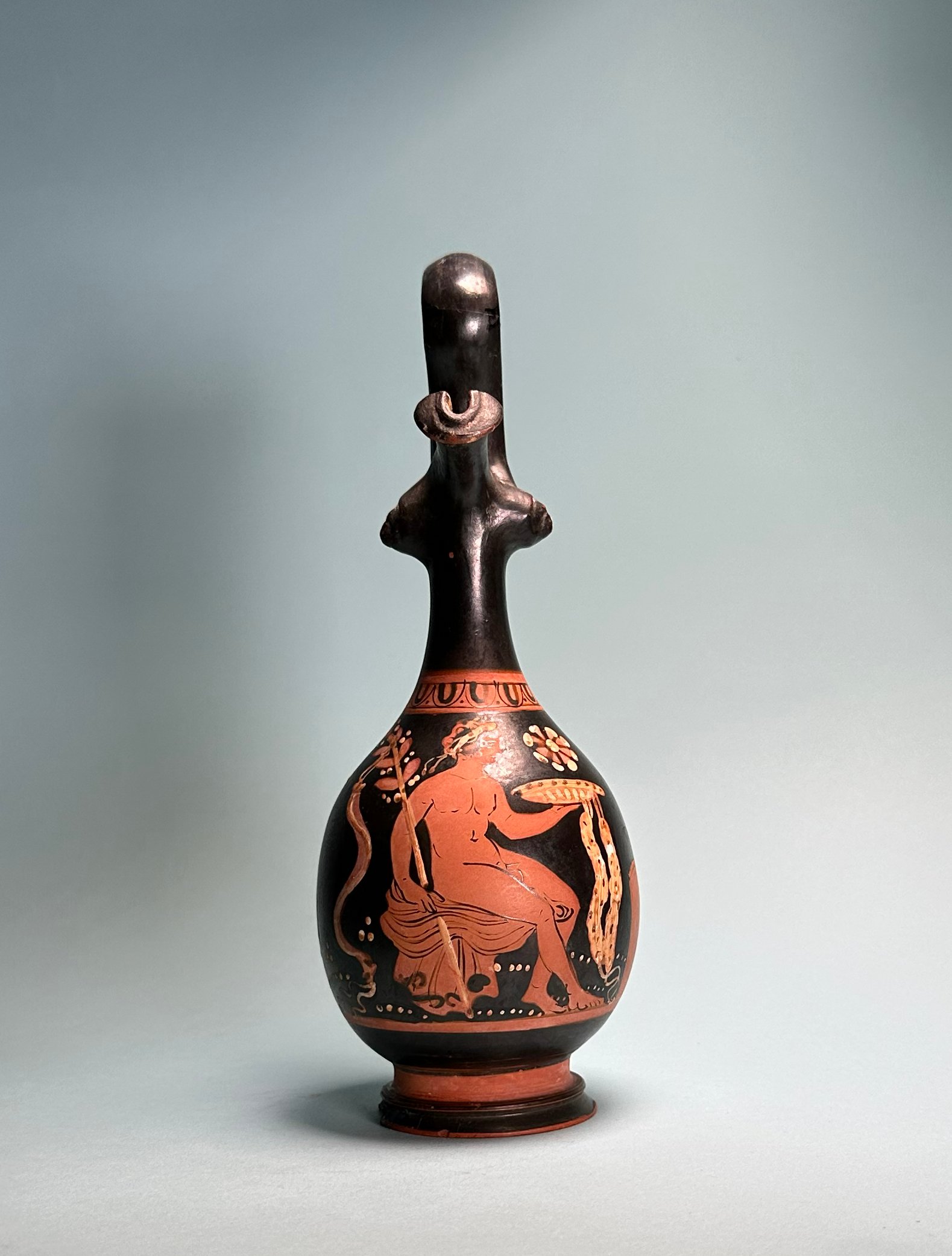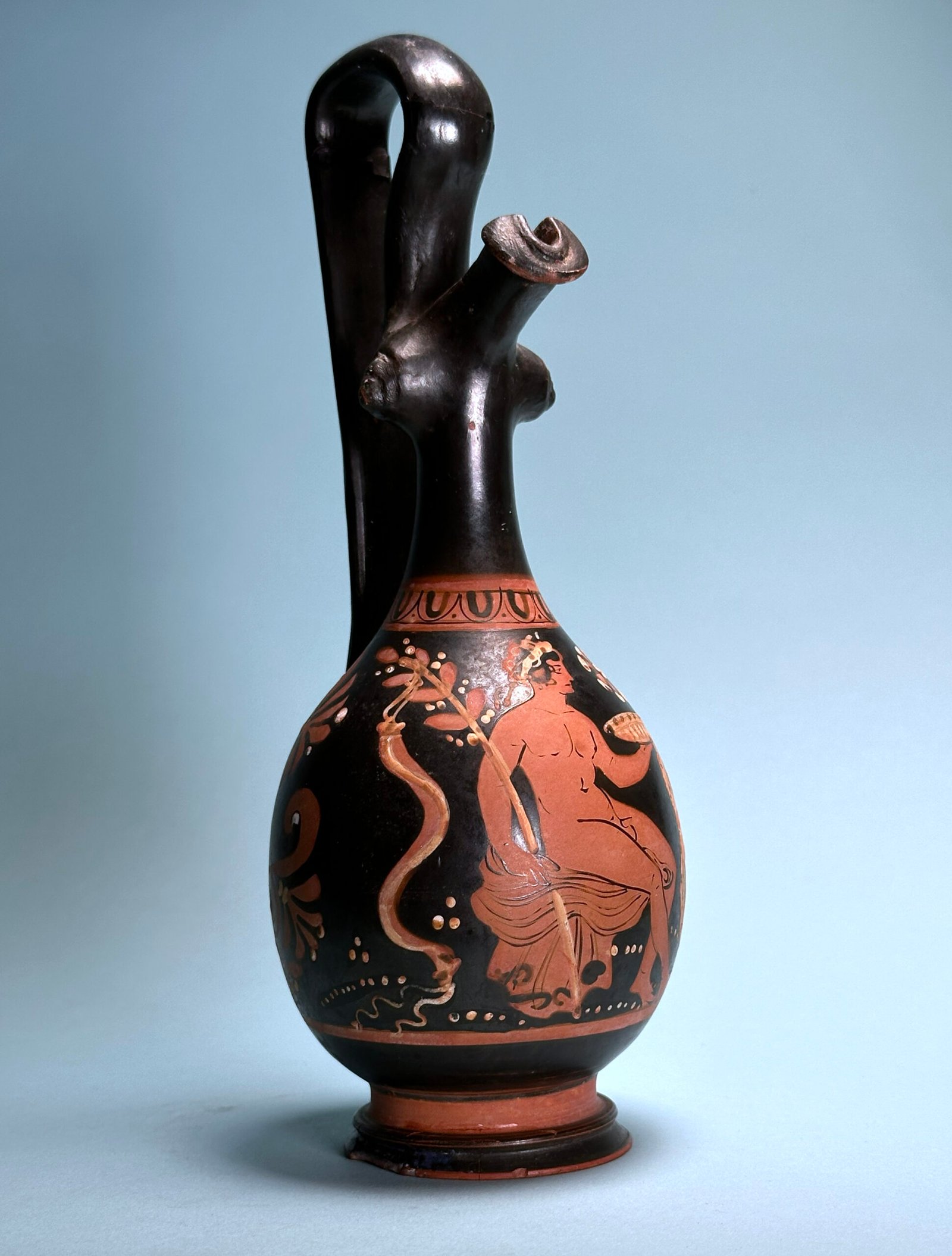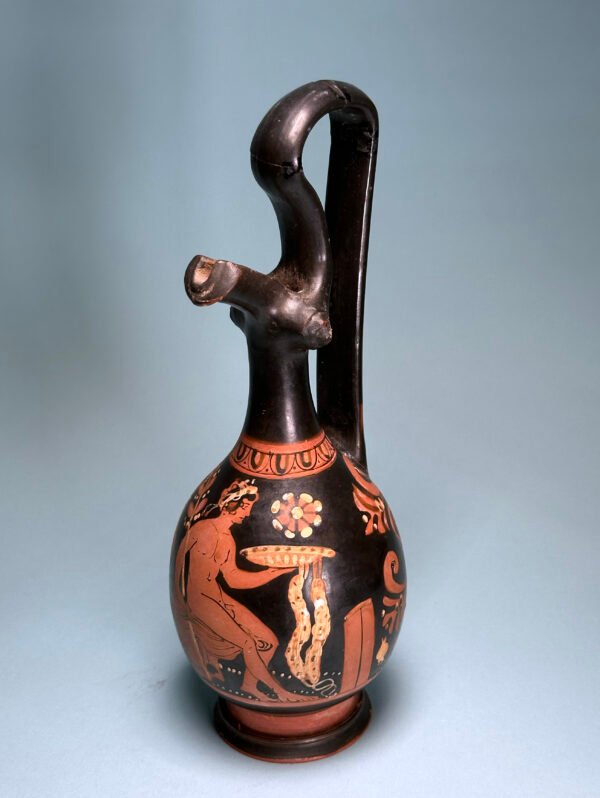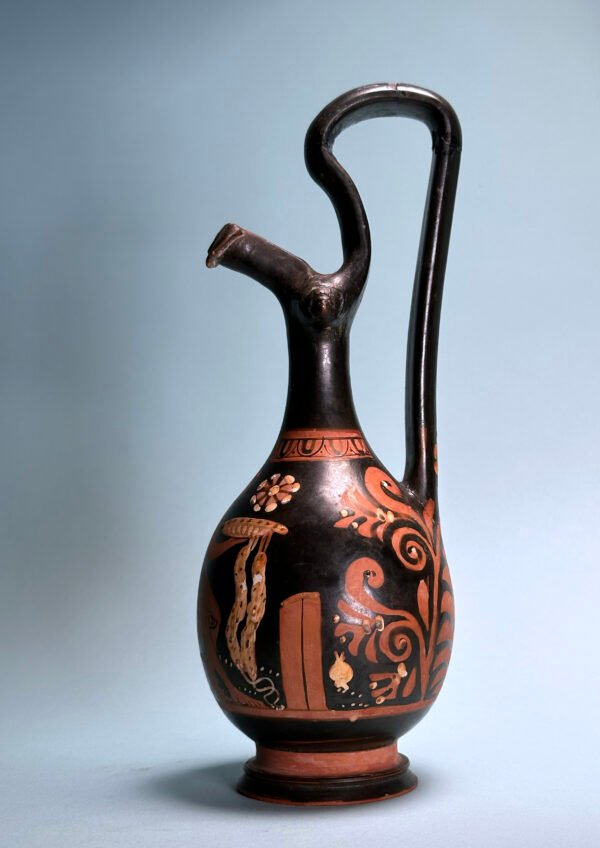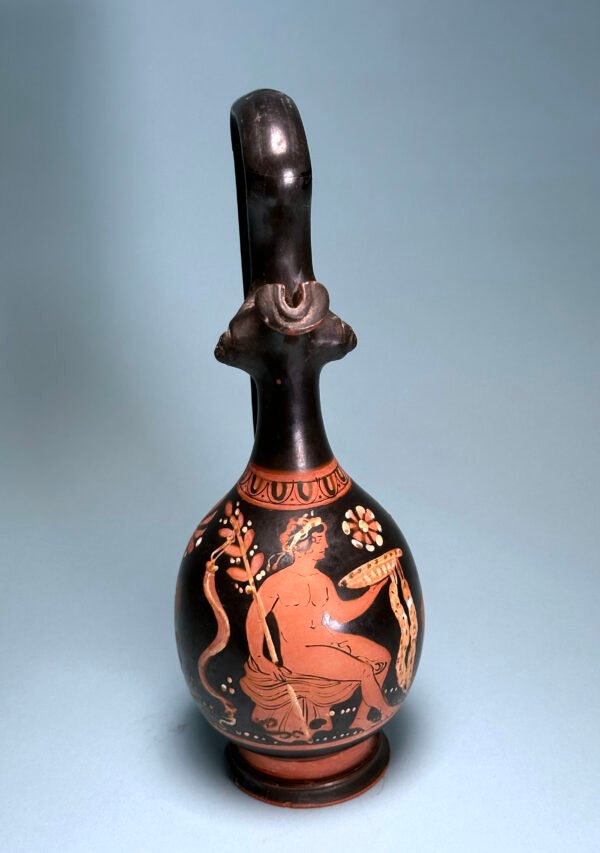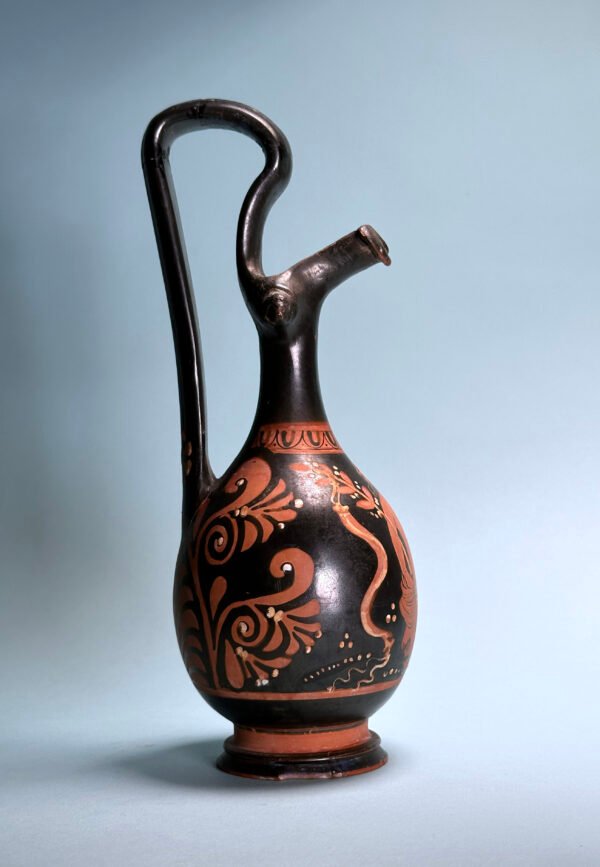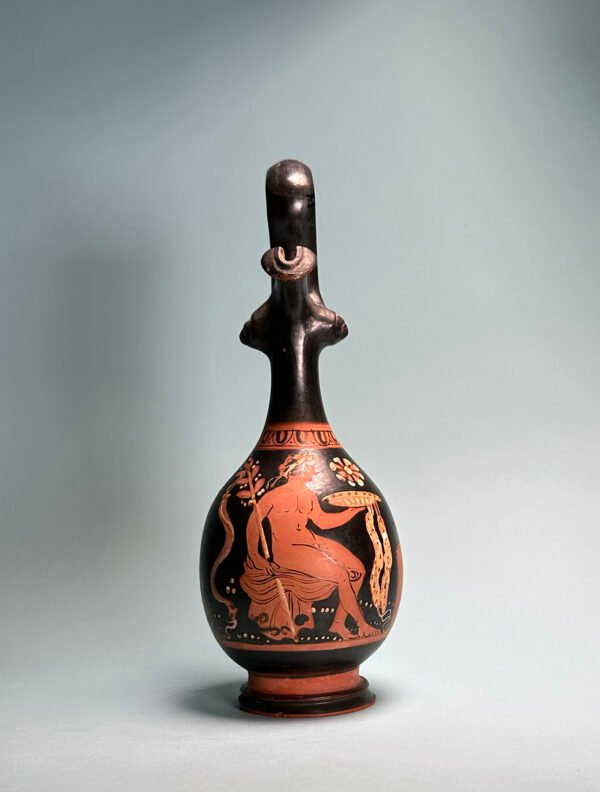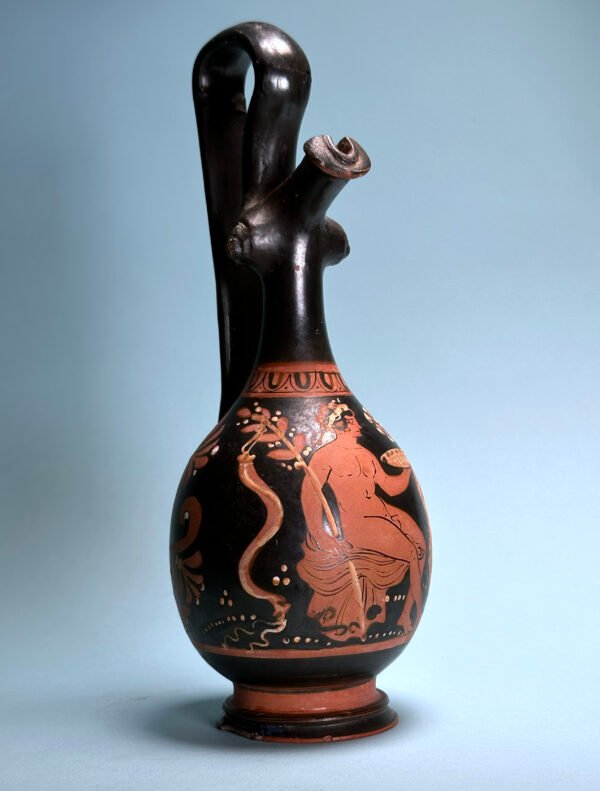
An ancient Apulian Greek red-figure ephichysis with a round body and slender neck with molded heads at the base of the spout; the body with a nude male figure seated on his garment holding a palm frond and patera each draped with a tania.
The output and quality of the Greek colonial potters working in Southern Italy increased greatly following the Peloponnesian War when Attic exports fell off sharply. South Italian Colonial Greek craftsmanship of the 4th century BC was an amalgamation of the Ionian (Athenian, Attic) conventions, and Doric (western colonial Greek) styles, with a noticeable native Italian aesthetic. The five predominant regional schools of South Italian pottery were: Apulian, Sicilian, Lucanian, Paestan, and Campanian. The Campanian region around the Bay of Naples, produced red-figure vases in the 5th and 4th centuries BC. The fine light brown clay of Campania produced a distinctive look. Campanian potters preferred mostly smaller vessel types, but did produce larger vessels like bell kraters and bail-amphora. Subjects include youths, women, birds and animals, and often native Samnite warriors. At 4,000 known vases, the Campanian style is the second most common in the region after Apulian.
$4,500