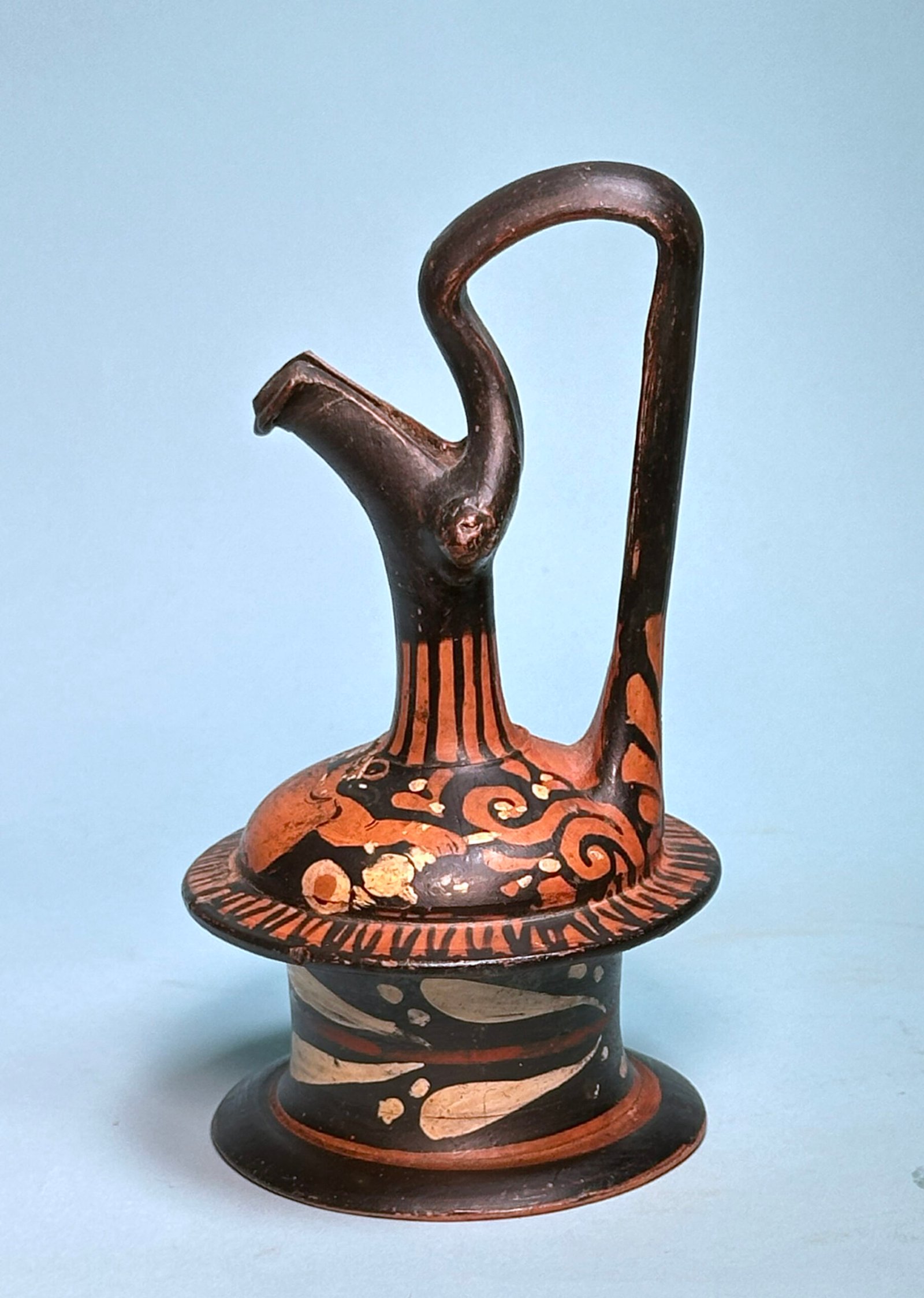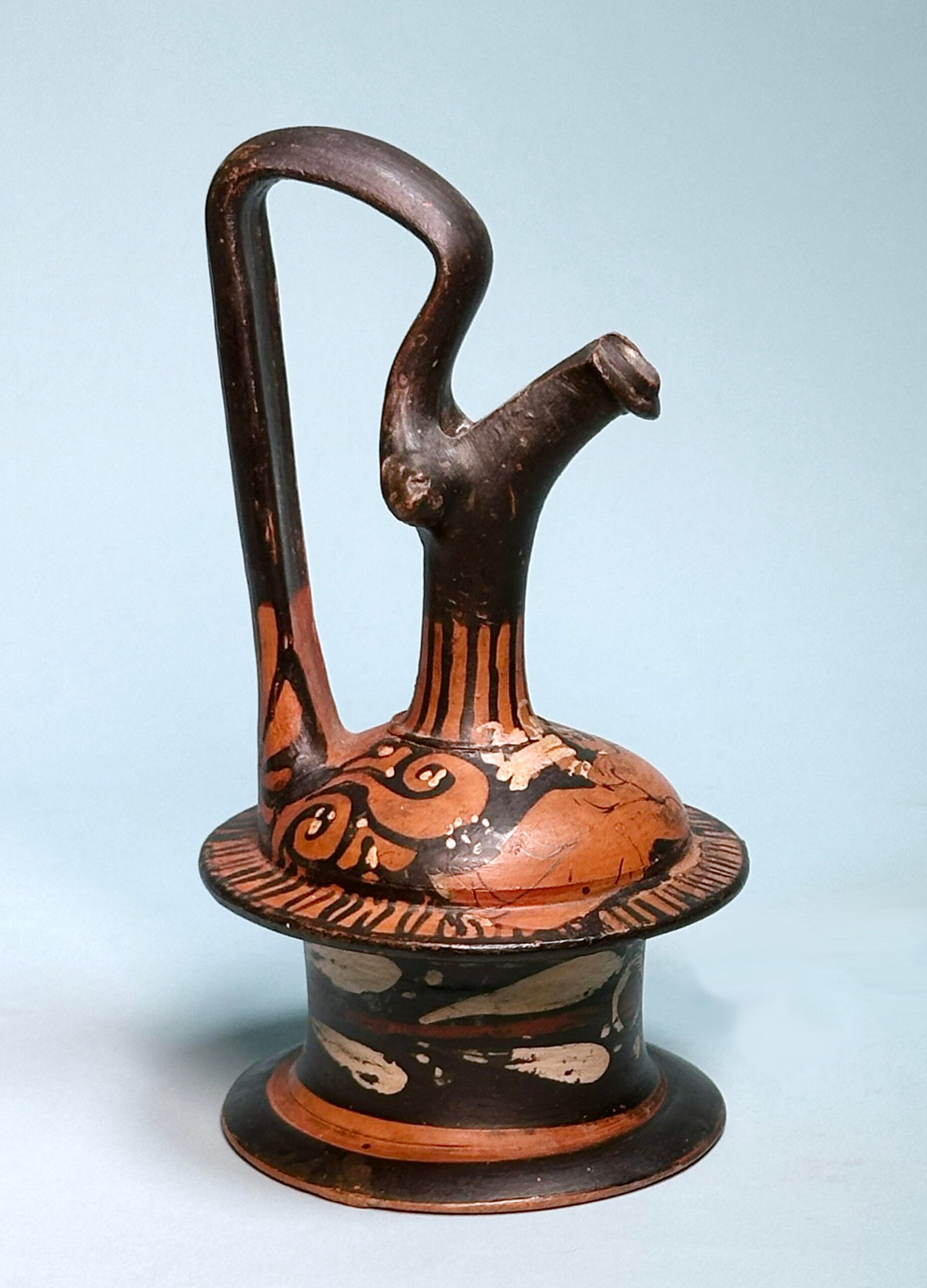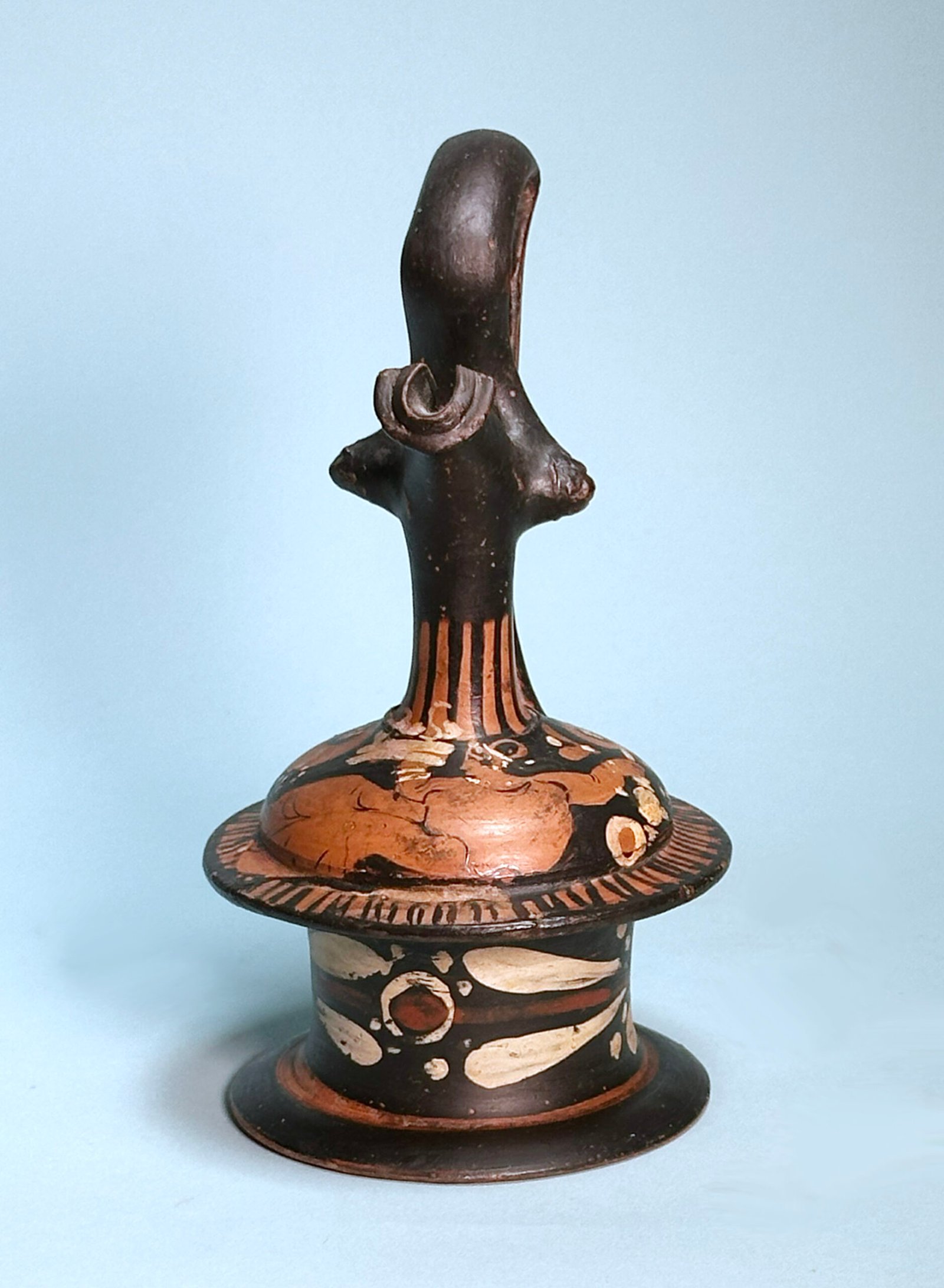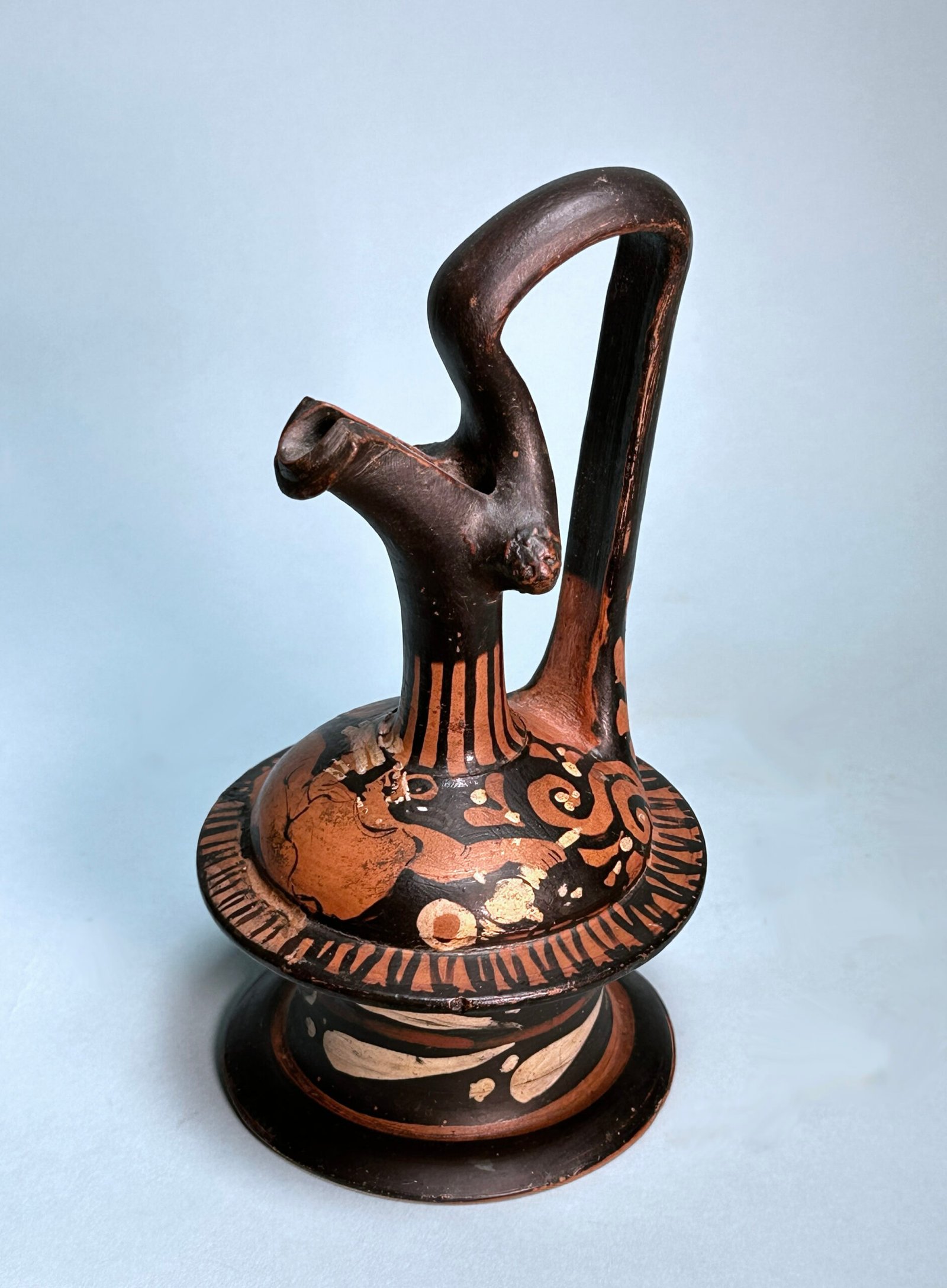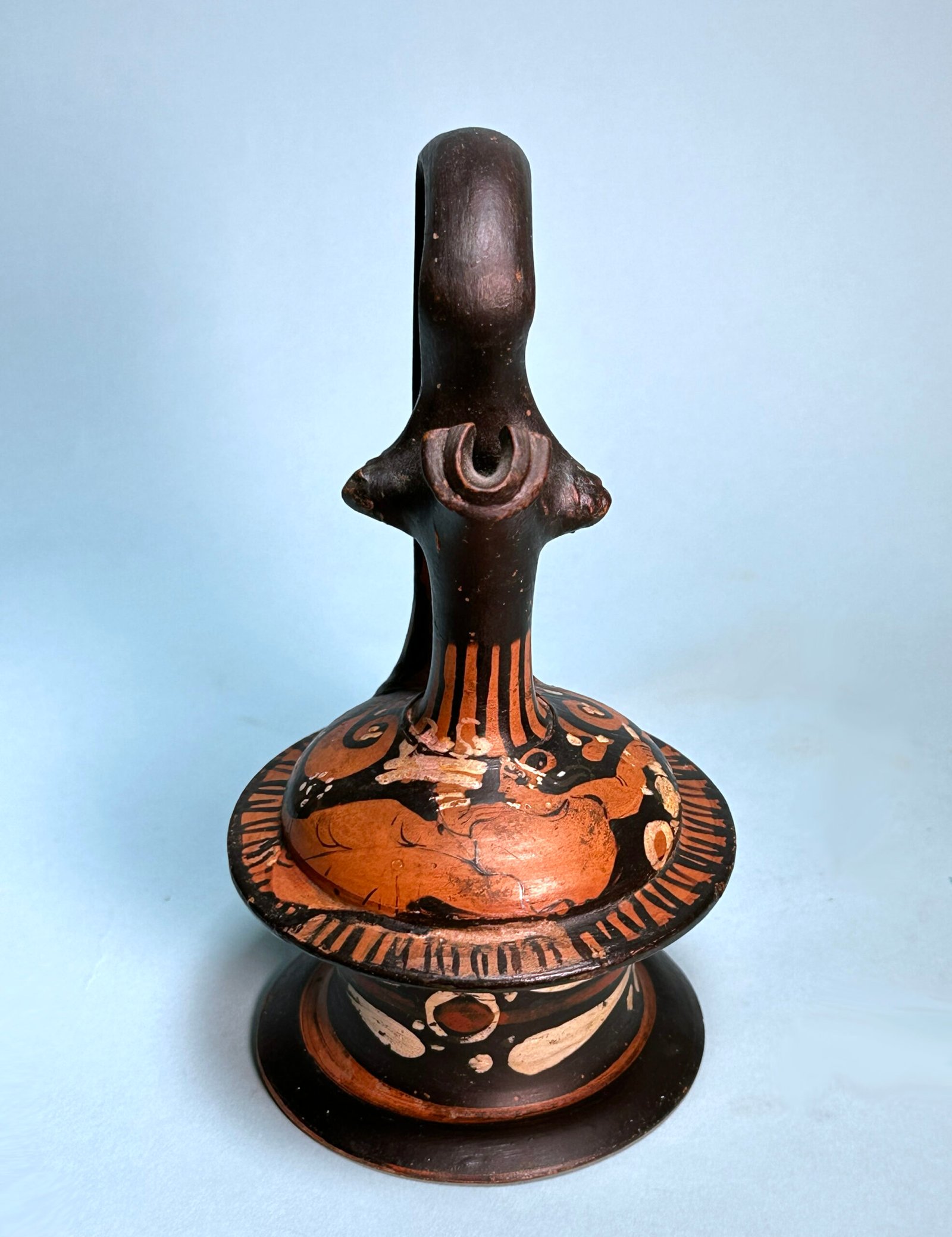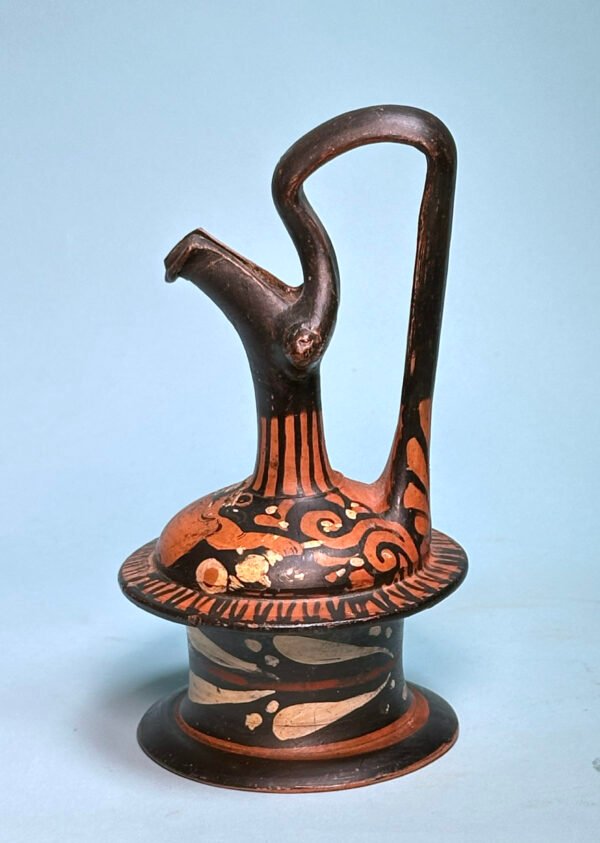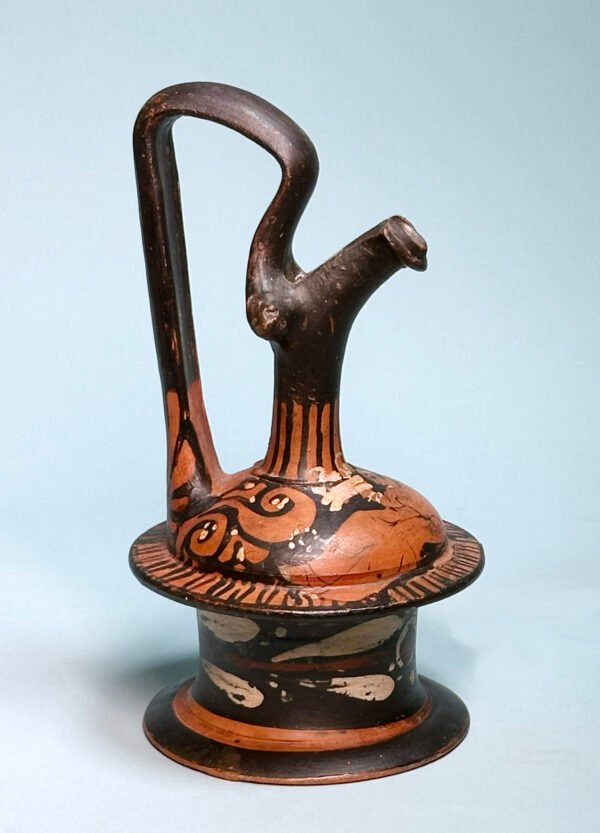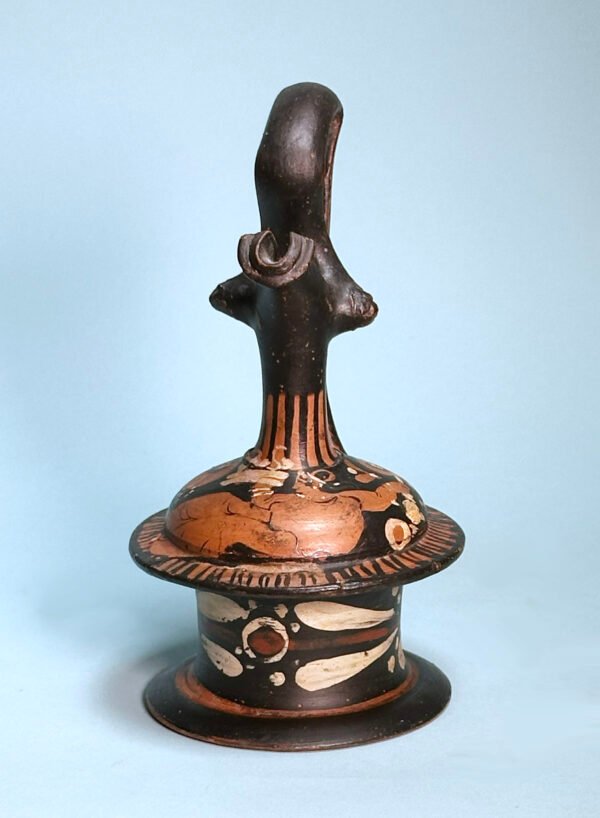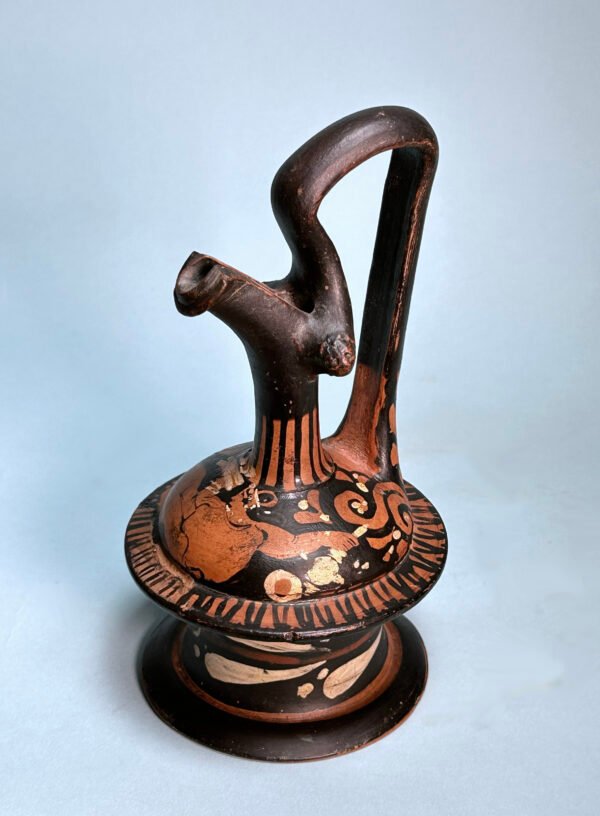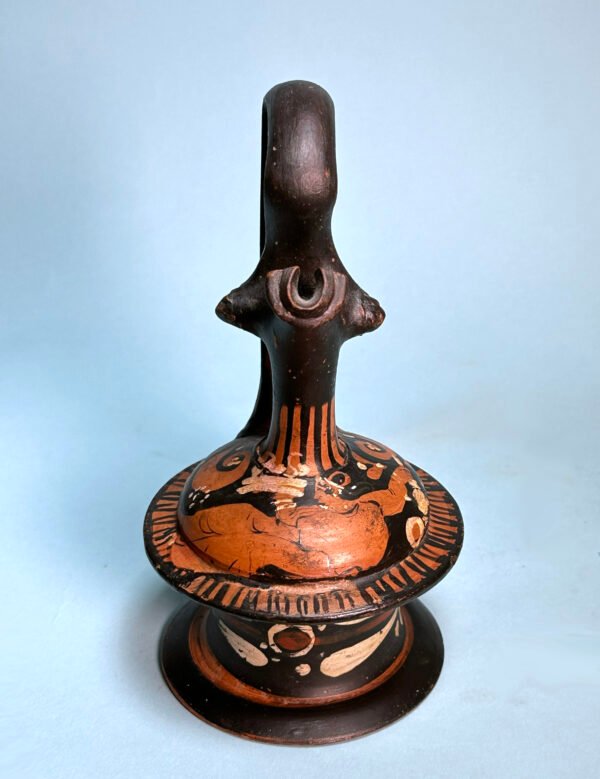
An ancient Apulian Greek red-figure epichysis with a spool-shaped body and long, slender neck with two faces at the base of the mouth, with a reclining draped woman on the shoulder and laurel pattern around the body.
The output and quality of the Greek colonial potters working in Southern Italy increased greatly following the Peloponnesian War when Attic exports fell off sharply. South Italian Colonial Greek craftsmanship of the 4th century BC was an amalgamation of the Ionian (Athenian, Attic) conventions, and Doric (western colonial Greek) styles, with a noticeable native Italian aesthetic. The five predominant regional schools of South Italian pottery were: Apulian, Sicilian, Lucanian, Paestan, and Campanian. Gnathia ware is so named as it was first found at the Apulian site of Egnathia. The black glaze ware is often decorated with applied red, white, or yellow painted floral motifs. Production probably was centered around Taras, with workshops in Egnathia, Canosa and Sicily.
$1,750